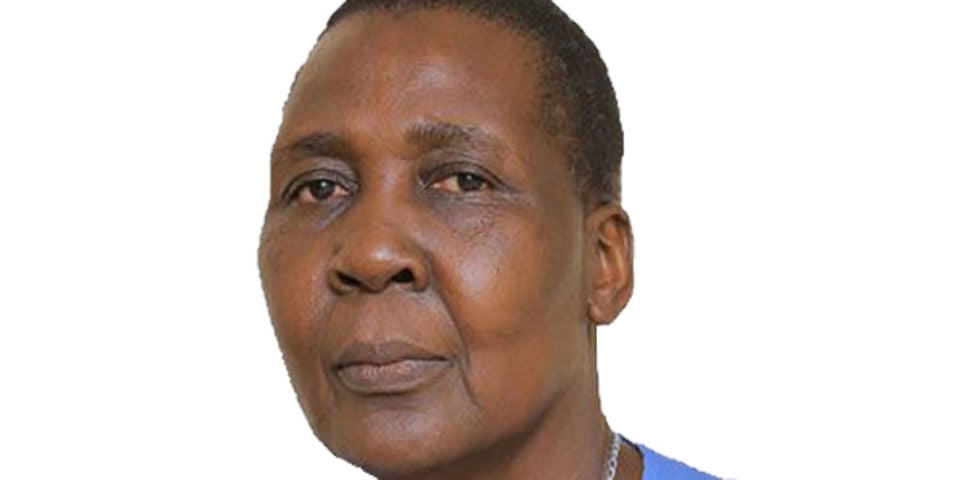
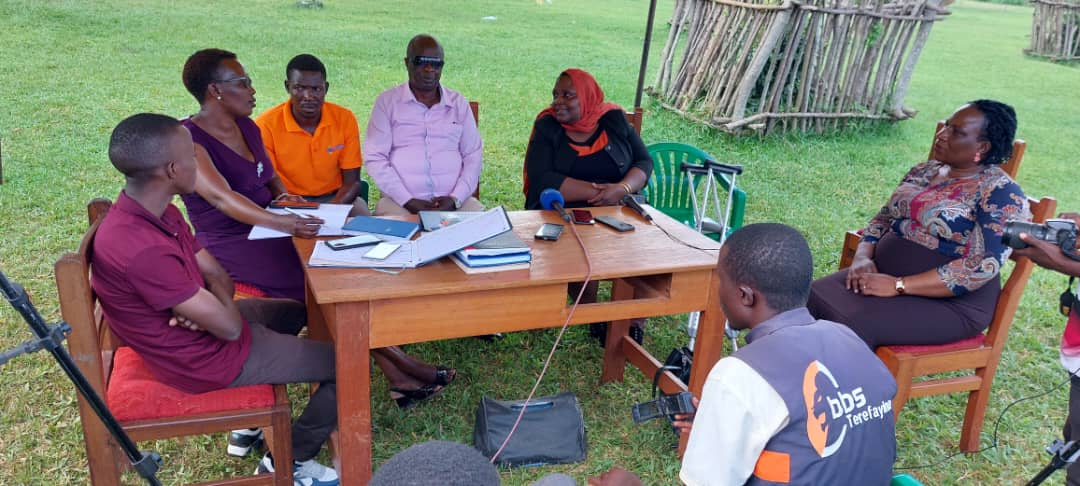
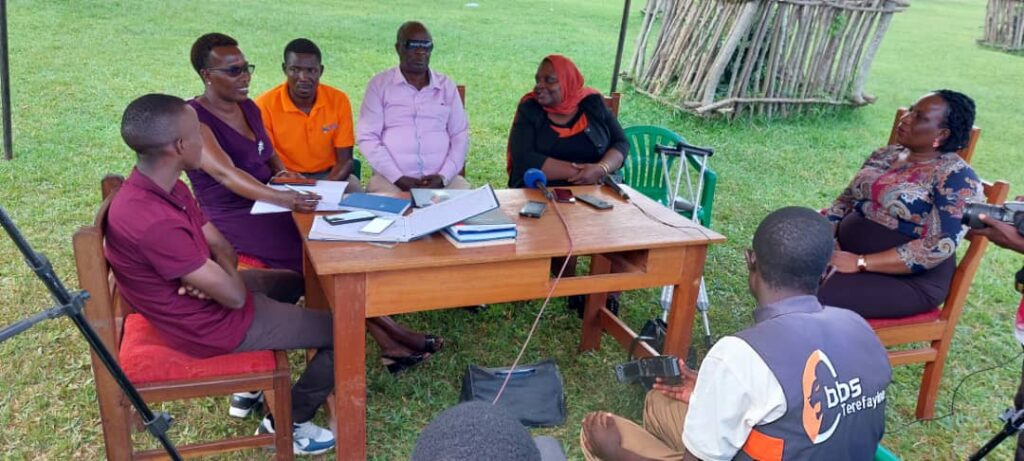
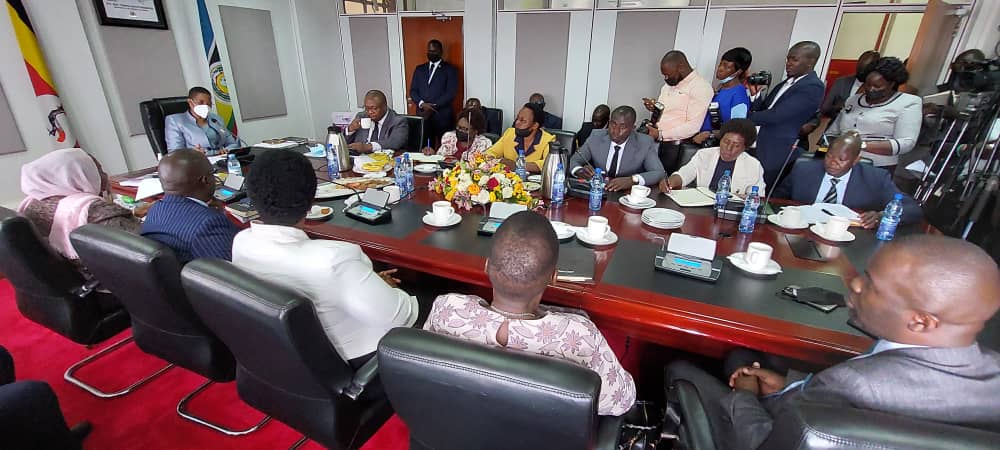
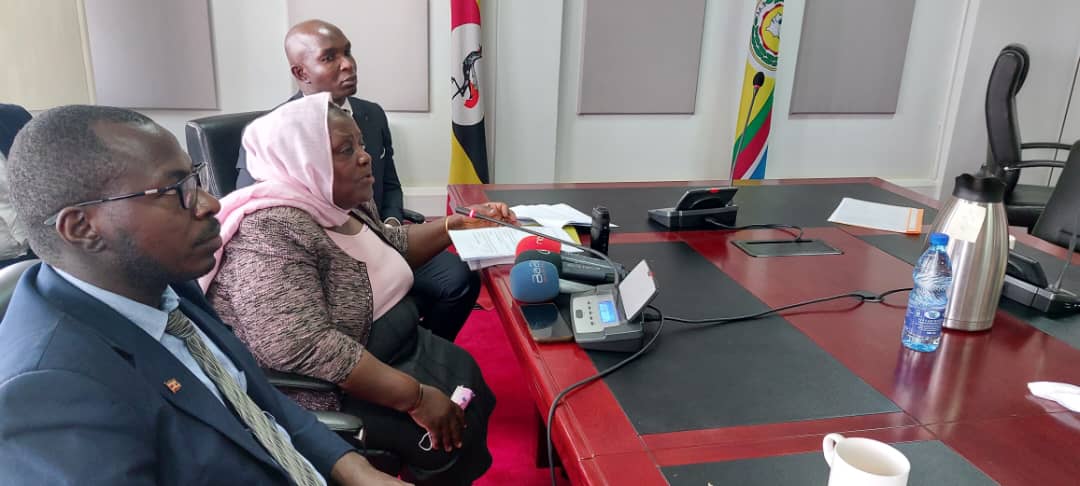
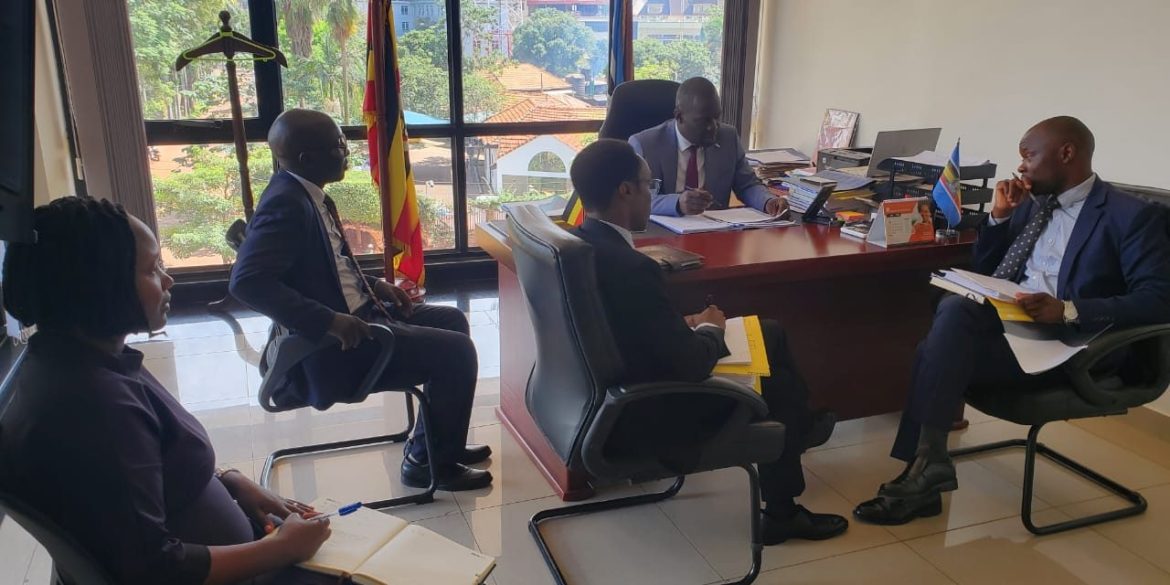
The Equal Opportunities Commission yesterday held a Tribunal at its headquarters, Kingdom Kampala, to deliver a ruling on a contentious land issue. In the matter of Mbabazi Norman and others versus Hoima Sugar, it was determined there were indeed elements of unfairness and discrimination, and resultantly, that the case would be handled by the Commission.
Category:
G&E
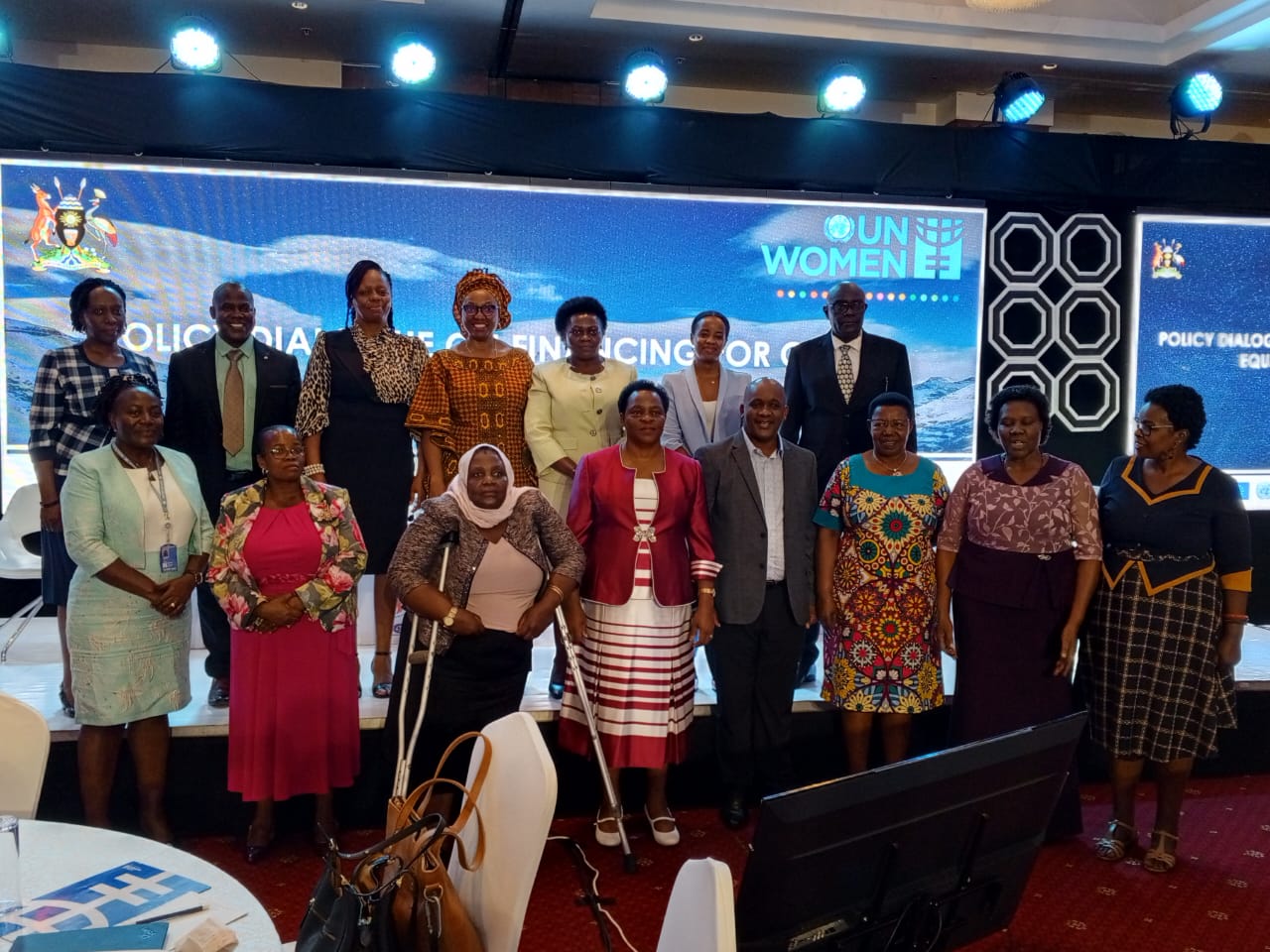
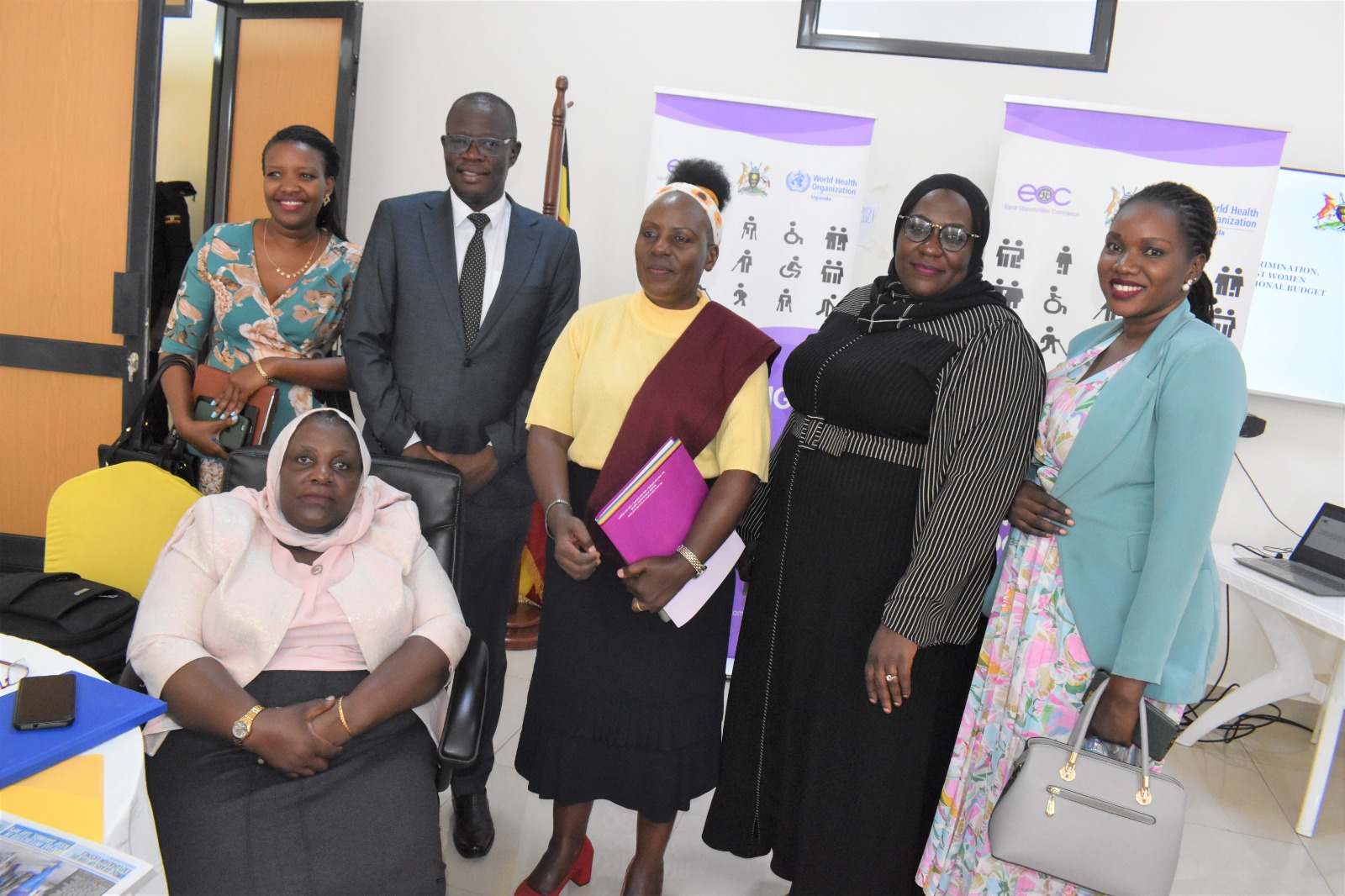
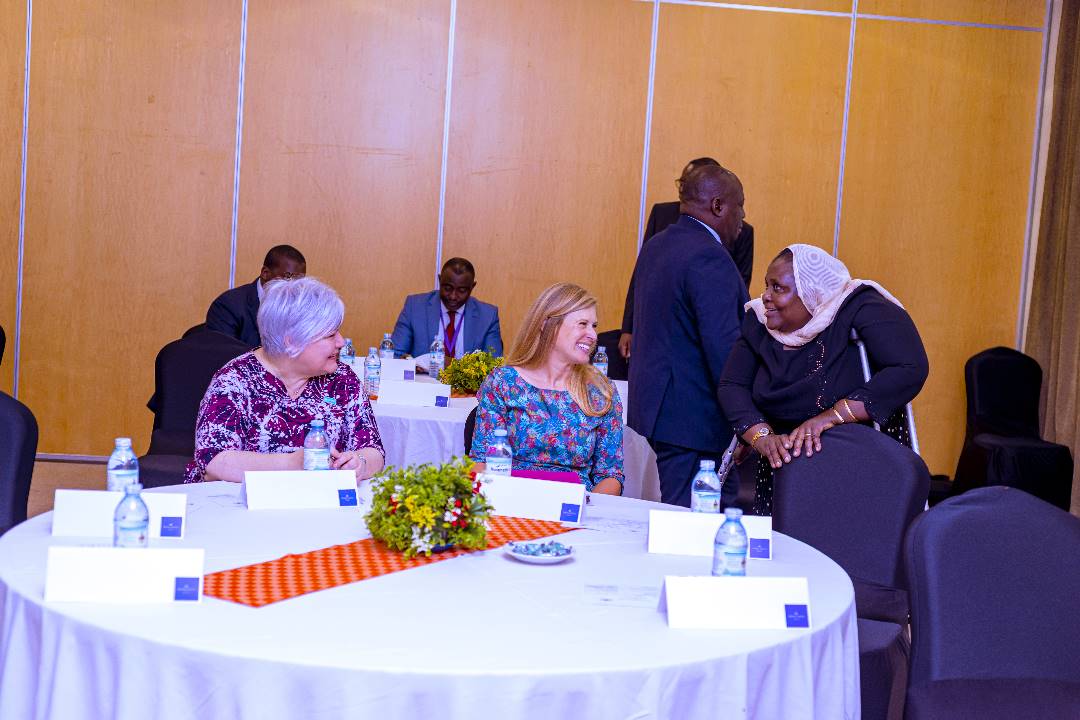
The Commission in partnership with UN_Women Ministry of Gender Labour and Social Development and @CSBAGUGANDA
held a Dialogue on Financing for Gender Equality and Development on 19th April 2023 at Sheraton Hotel.
The Policy Dialogue was held under the theme “The impact of the national budgets on the delivery of Gender Equality and Reducing Vulnerabilities to accelerate the achievement of the NDP III targets & SDGs”.
The focus was on accelerating the implementation of NDP III and Sustainable Development Goals, with the need to prioritize Gender Equality and Vulnerability reduction through budget allocations.
The Chairperson of the Commission, Hon. Safia Nalule Juuko presented findings from the Commission that highlighted funding gaps such as:
- Reduction of the Agro-Industrialisation Budget from 1,666.9 billion (FY 2022/23) to 1,329 Billion in 2023/24.
- Eviction of poor people from their land especially in the Buganda Region.
- The availability of equipment and teachers to promote science teaching is highly limited, despite Sciences being a priority area for the Government
- Uganda’s health sector remains significantly underfunded, mainly
relying on private sources of financing, especially out-of-pocket spending. At 9.6 % of total government expenditure, public spending
on health is far below the Abuja target of 15% that GoU committed to. - High cost of education
- Limited funding towards management of Externalization of Labour.
- Financing Road Safety Measures to reduce the high rate of Road Accidents
- Low investment in employment-led ventures which has propelled youth unemployment
- The plight of ethnic minorities; The Ugandan Constitution currently recognizes 67 ethnic groups and yet there are other ethnic minorities that are not
recognized. They are denied National IDs, which affects their access to essential social services. - Inadequate Financing towards cancer treatment; The burden of cancer in the country is projected to reach 40% in 2030 due to
changes in risk factors and population growth rate.
Measures Taken by EOC to Enforce GEB
i. The Commission has engaged with all the representatives of the vulnerable persons and profiled the needs of each constituency.
ii. The Commission has had a series of Engagements with the various Committees of Parliament on the enforcement of compliance with gender and equity requirements for non-compliant MDAs.
iii. The Commission has severally summoned non-compliant MDAs and made commitments with them to address issues of concern.
iv. The Commission has also developed a series of guidelines on gender and equity planning and budgeting. Plans are underway to develop more vote-specific guidelines.
v. The Commission has also supported various MDAs and built staff capacity in Gender and Equity Planning and Budgeting.
vi. Annually assessed the MPSs and BFPs for Compliance with G&E
Recommendations by the Commission:
i. All MDAs with the support of the Uganda Bureau of Statistics should embrace data disaggregation at all levels and with respect to Gender & Equity
ii. Parliament should invoke its powers and enforce sections 78 and 79 of the PFMA with respect to Gender & Equity
iii. GoU should fulfill its commitment under the Maputo Protocol of appropriating 15% of its National Budget towards Health Care. This will help in addressing a number of Health
Gaps that relate to gender and equity issues.
iv. MDAs should commit to redressing imbalances which exist through the allocation of financial resources to specific measures
as provided for in the PFMA, 2015.
v. GoU should enhance funding for agriculture, education, and Health including solving the land eviction question.
vi. MDAs with support from UBOS and EOC should endeavor to disaggregate their data.
vii. Introduce the Gender Aware Statement under the Public Budgeting System
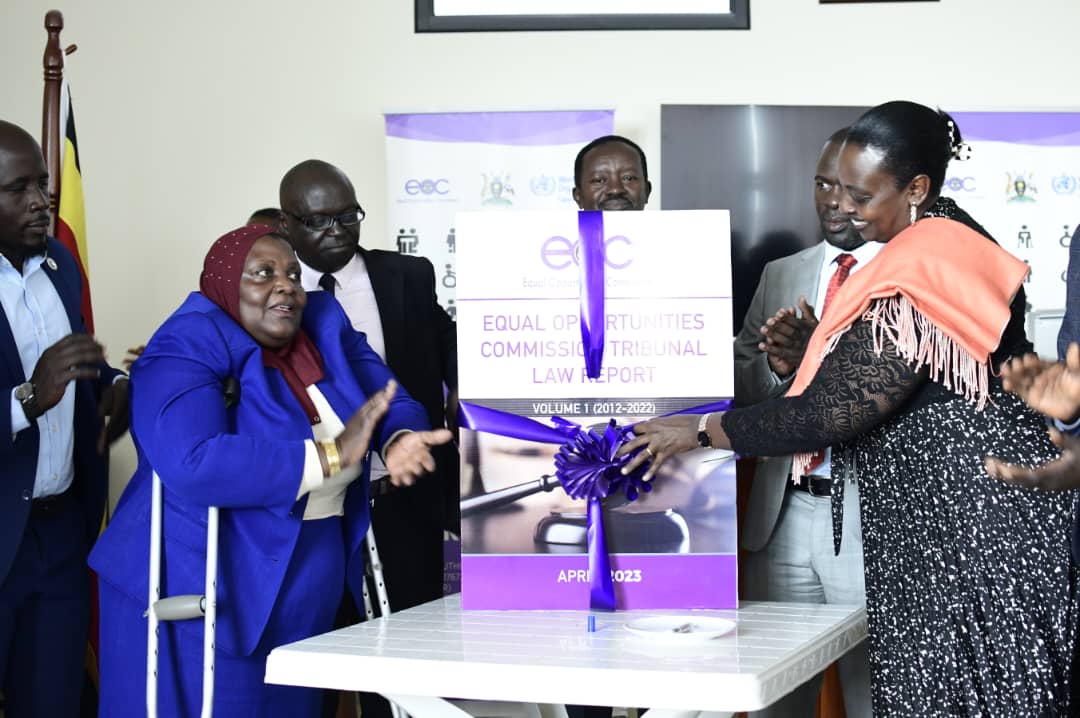
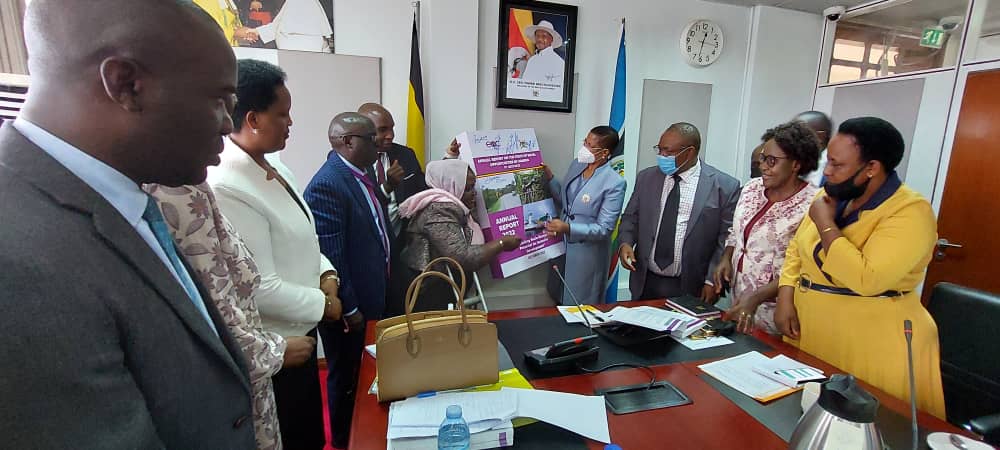
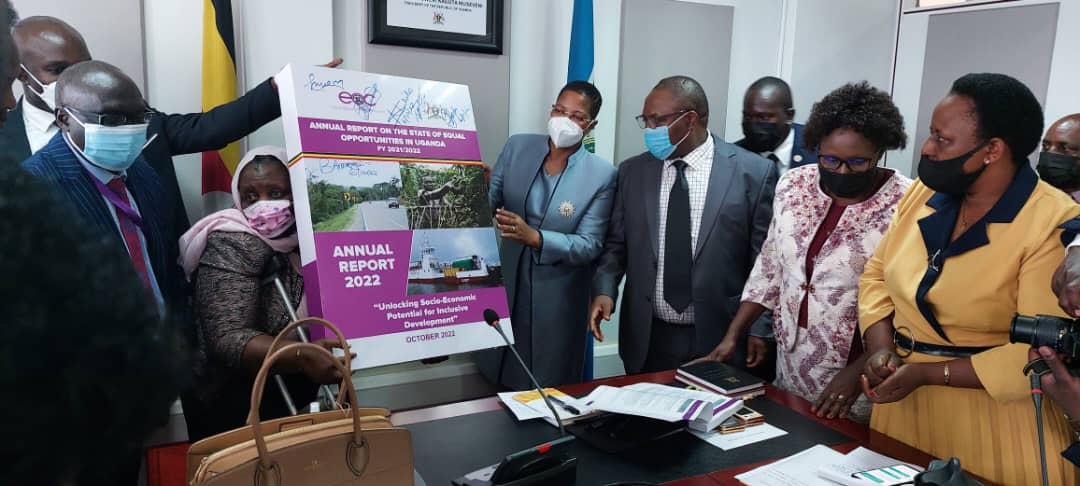
The Equal Opportunities Commission on Thursday 13th April 2023 launched its Tribunal Law Report at the Commission Headquarters at Kingdom Kampala.
The launch was presided over by the Chairperson of the Commission, Hon. Safia Nalule Juuko, and graced by honorable Members of Parliament led by the Chairperson Legal Affairs Committee of Parliament Hon Robinah Rwakoojo
The Commission has the mandate to address issues of inequality and marginalization against vulnerable people and as such handles cases through its Legal and Investigations department before finding a resolution either through arbitration between the contentious parties or summary judgment in its autonomous court – known as the Tribunal.
The report highlights all the cases the Commission has worked on for the past years.
Hon Rwakoojo commended the Commission for the report and asked the Commission to continue its efforts to create justice for all.

3 Day Dialogue to deliberate on issues of discrimination, marginalization and exclusion against youth, older persons, women, children and people with disabilities, that must be addressed by MDAs in the National Budget for the FY23/24
by Kevin
3 DAY DIALOGUE TO DELIBERATE ON ISSUES OF DISCRIMINATION, MARGINALIZATION AND EXCLUSION AGAINST YOUTH, OLDER PERSONS, WOMEN, CHILDREN AND PEOPLE WITH DISABILITIES, THAT MUST BE ADDRESSED BY MDAS IN THE NATIONAL BUDGET FOR THE FY23/24
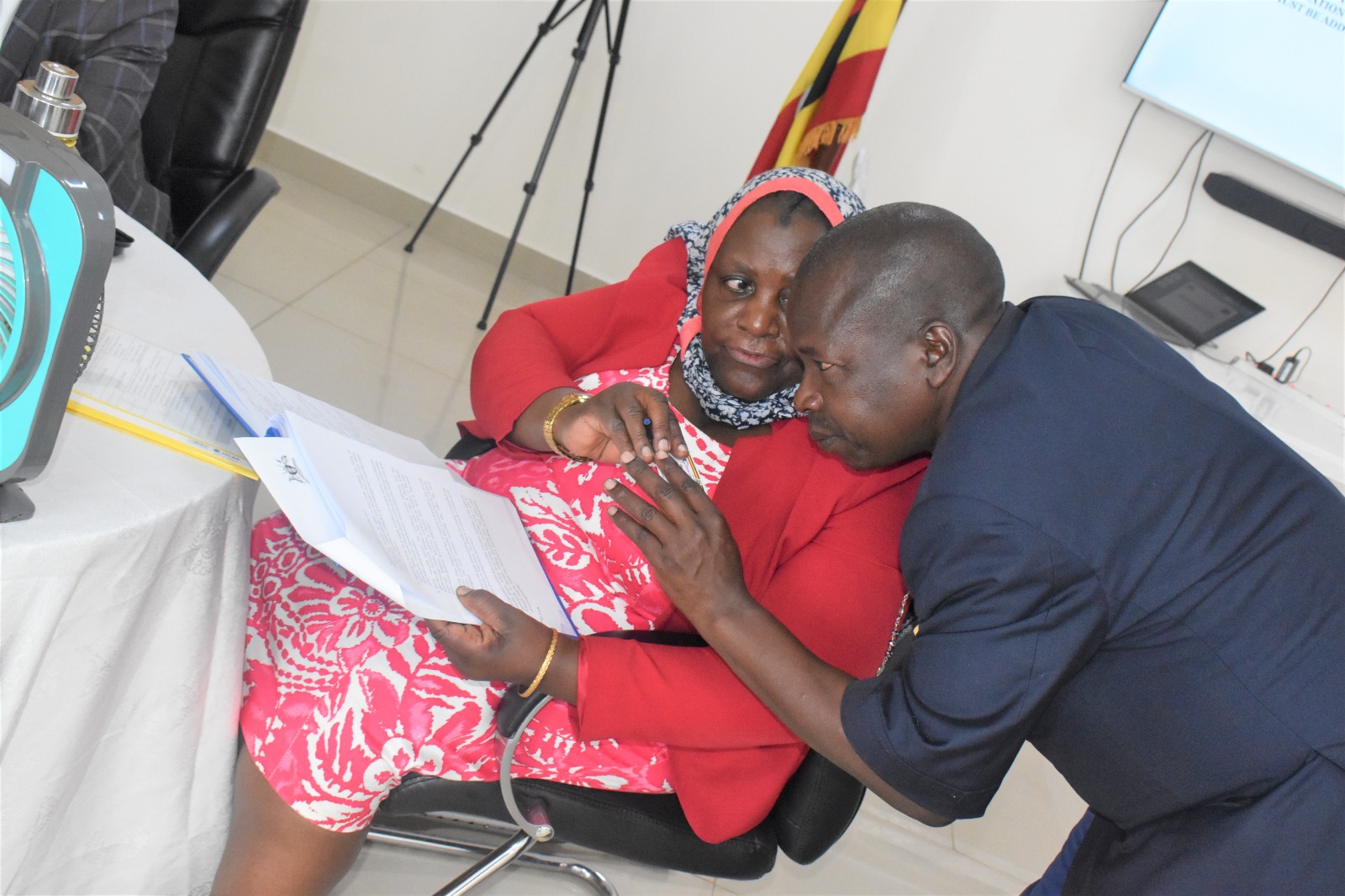
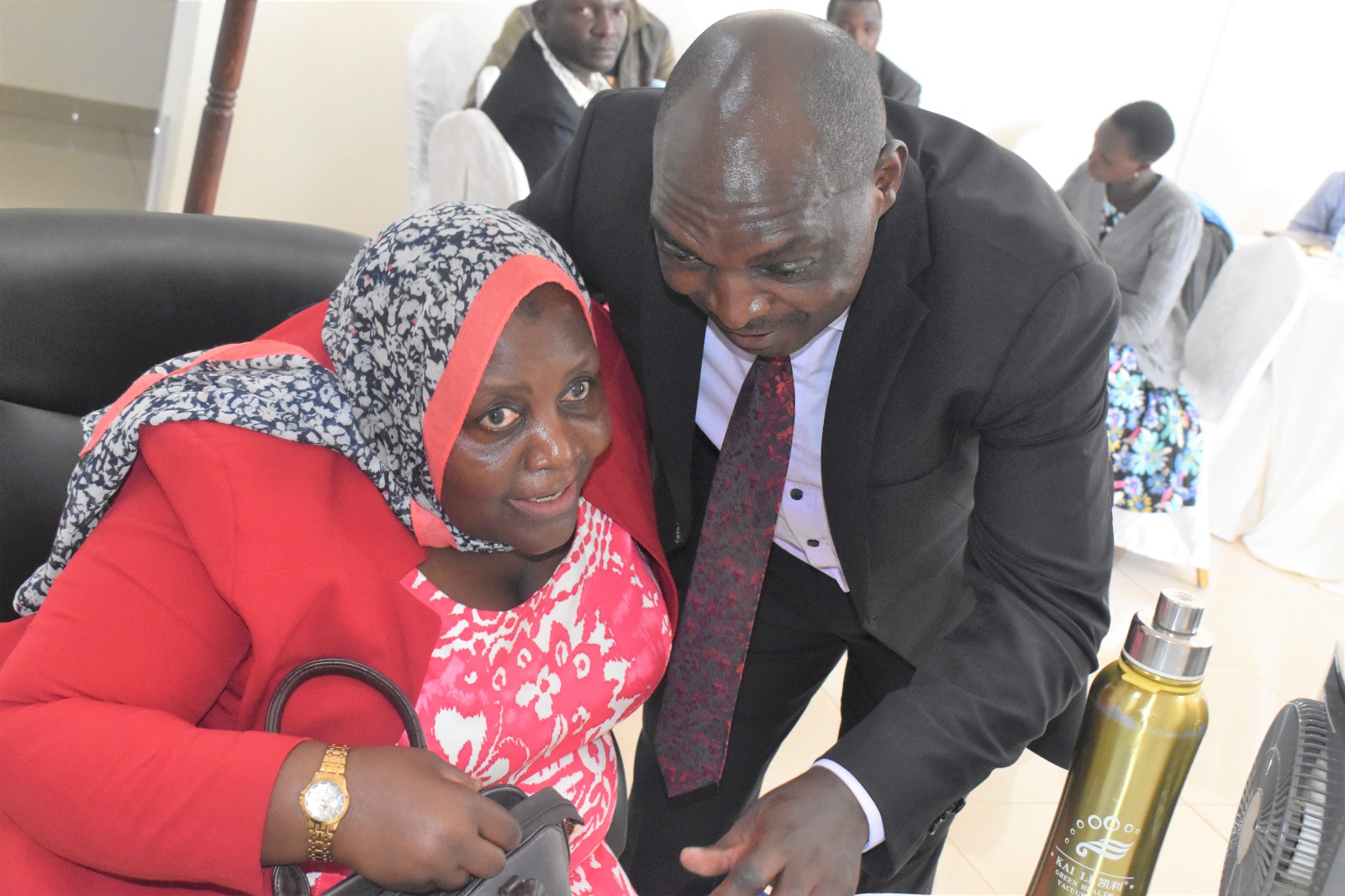
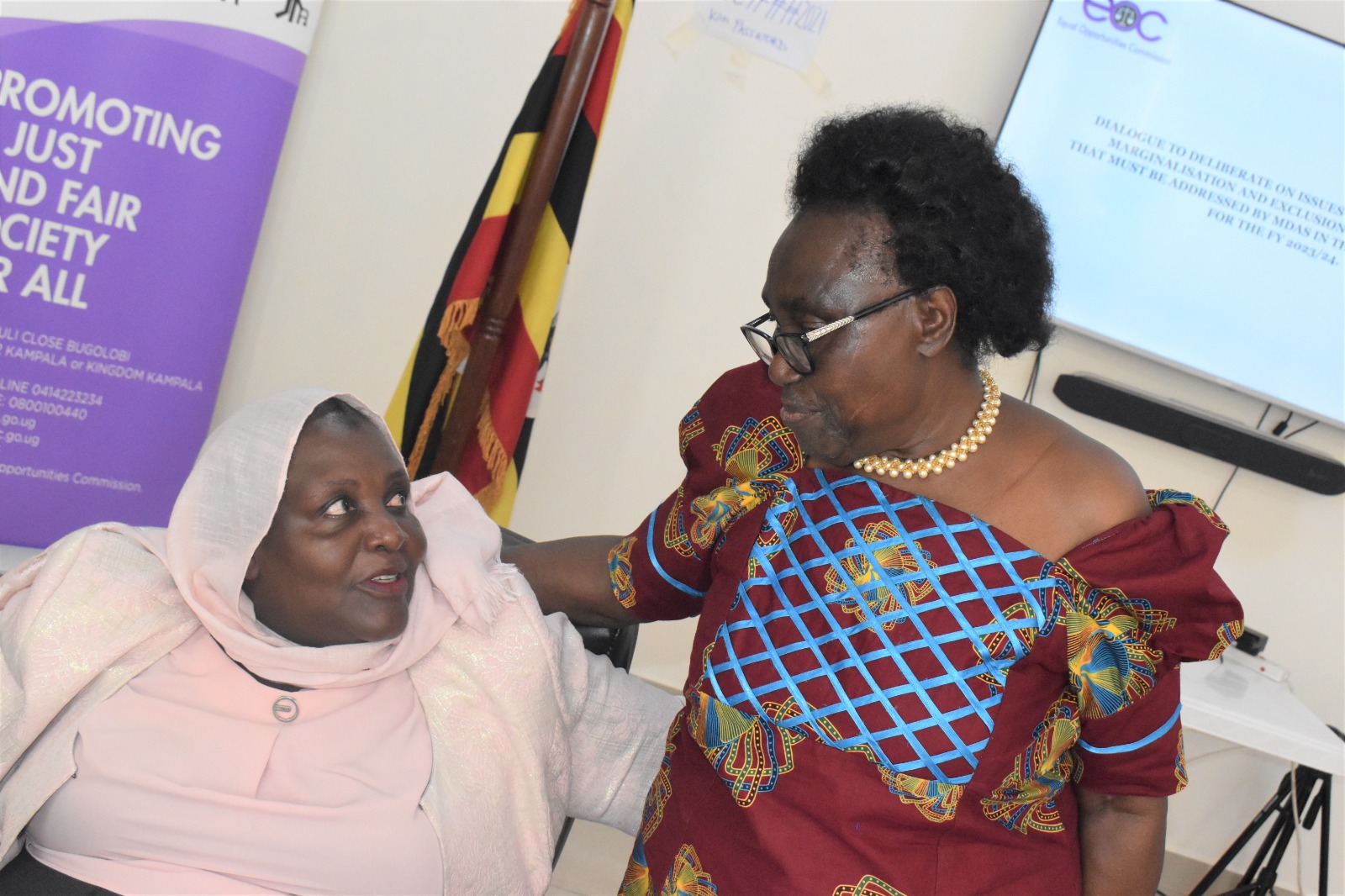
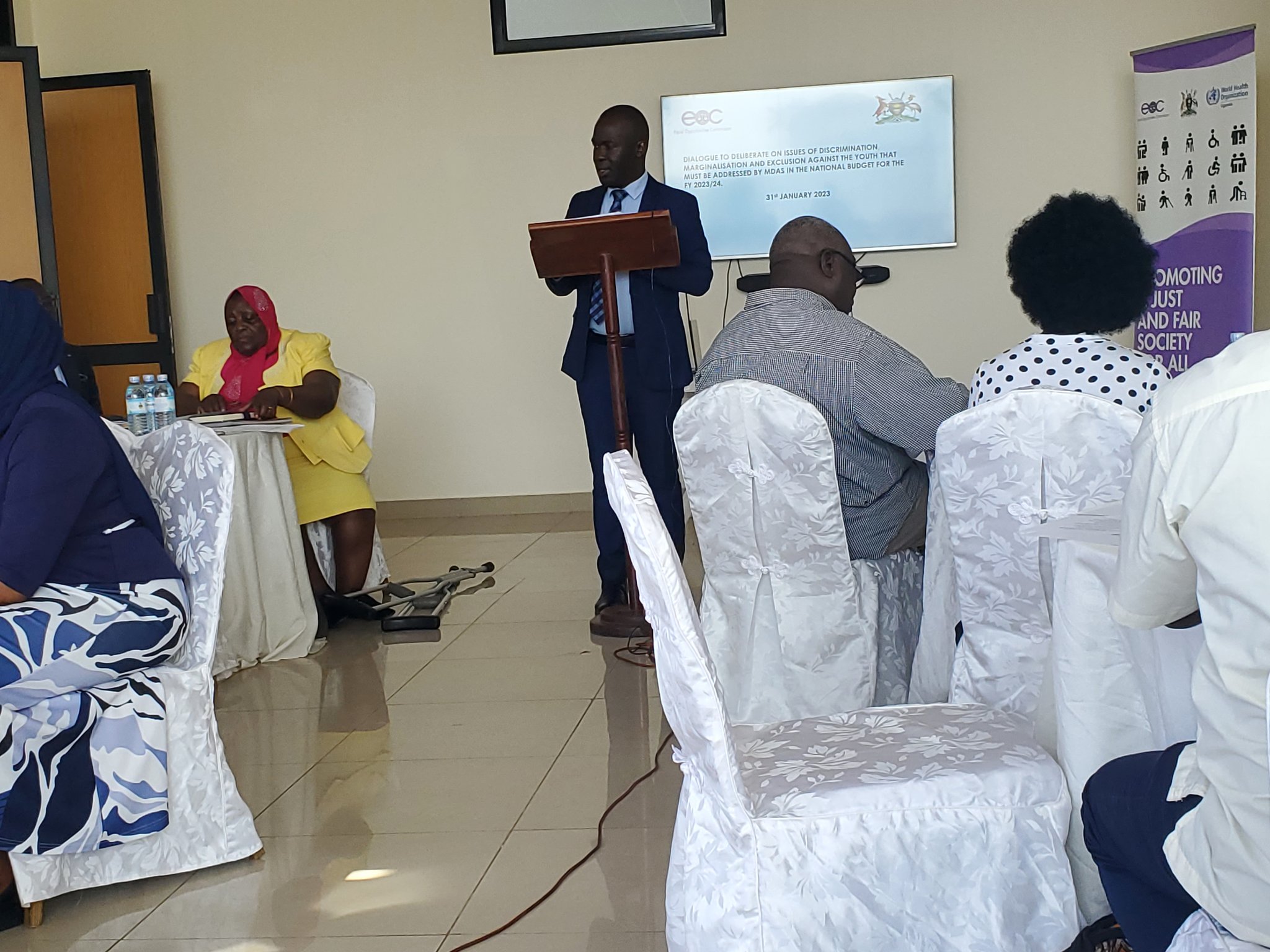
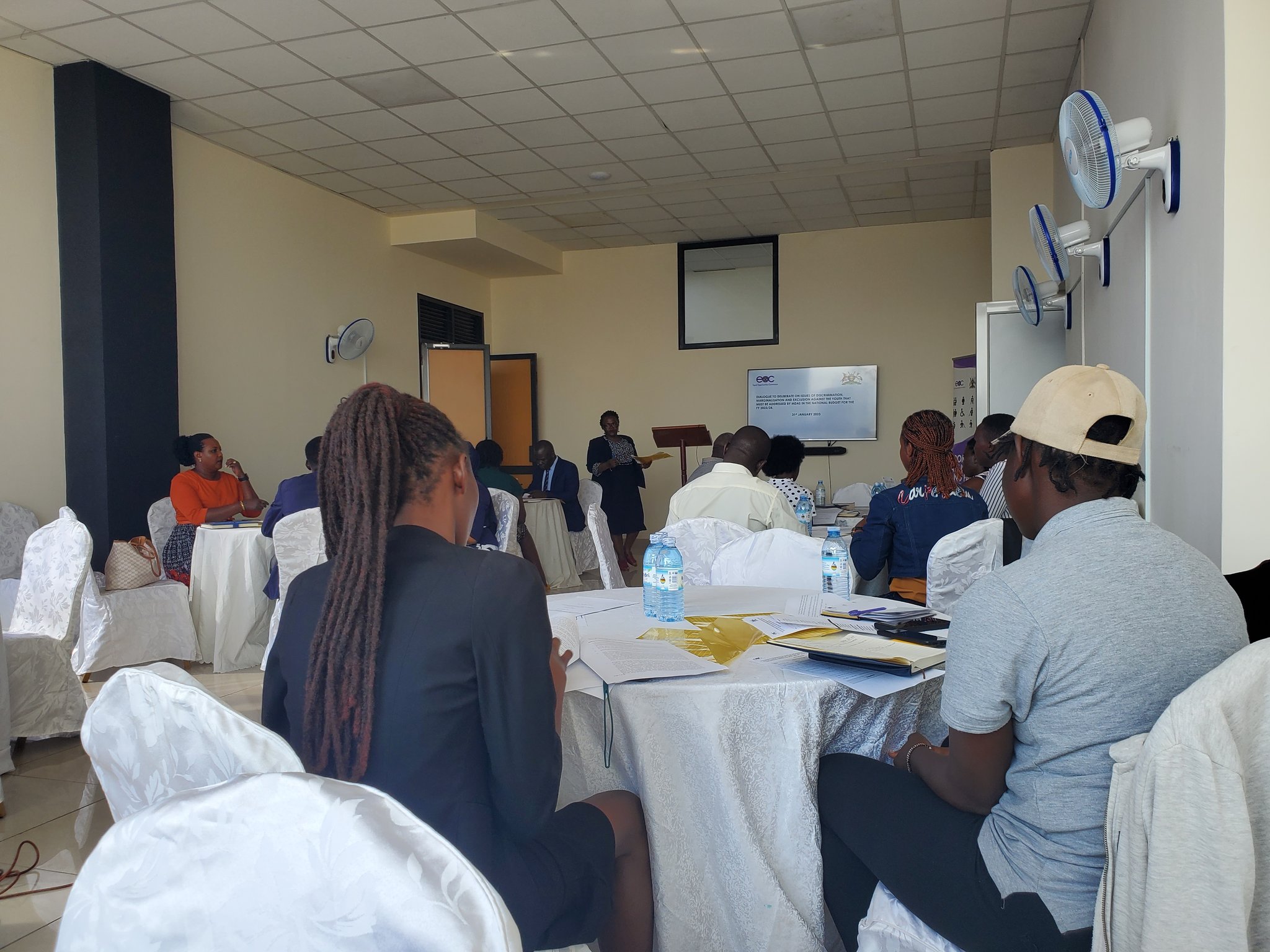
The Equal Opportunities Commission held a 3 day Dialogue at the Commission headquarters at Kingdom Kampala to deliberate on issues of discrimination, marginalization and exclusion against youth, older persons, women, children and people with disabilities, which must be addressed by MDAs in the National Budget for the FY23/24.
The Dialogue was spearheaded by the Chairperson of the Commission, Hon. Safia Nalule Juuko, and graced by various honorable guests including Members of Parliament, Committee members, and Commissioners from various Ministries.
Through audits like the Annual Report on the State of Equal Opportunities, the Commission has assessed the participation of Youth, Women, People with Disabilities, and Older Persons in development programs and made recommendations for their increased participation and benefit.
The Assessment of the MDA Budget Framework Papers also unfortunately showed a decline in compliance to Gender and Equity requirements compared to the previous financial year.
Some of the issues discussed included:
More decentralization to guide funds to the Youth, Women, People with Disabilities, and Older Persons
Ring-fencing opportunities for the Youth, Women, People with Disabilities, and Older Persons
Mental health awareness and support for the Youth, Women, People with Disabilities, and Older Persons
Deliberate involvement of the Youth, Women, People with Disabilities, and Older Persons in programs and initiatives
Discrimination of vulnerable Youth, Women, People with Disabilities, and Older Persons from scholarships and beneficial programs in favor of their
better placed and connected counterparts
There were also two relatively new key issues raised in the Dialogue by Hon. Sarah Opendi:

1. Sex Trafficking here in Uganda, where women and girls are deceptively recruited and forced into captive sex work. This is an alarming development and needs to be crushed before it can grow and spread.
2. Inattention to deadly diseases like sickle cells, which has a survival rate of less than 20% for babies born with it. She emphasized the need for couples need to get tested before having children so as to avoid such predicaments.
More pictures form the Dialogue.
Members and staff of the Equal Opportunities Commission met with donors on Tuesday 17th January at Protea Hotel to discuss the goals, achievements, obstacles, and way forward for the Commission in its bid to foster equality and justice for all Ugandans.
The EOC delegation was led by the Chairperson, Hon. Safia Nalule Juuko, and had a fruitful discussion with the donors.


Older persons act as models and are expected to pass on knowledge to younger generations

By Sister Mary Wasagali
In most contemporary families, older family members are often not given a chance to participate in parenting and nurturing of the younger ones.
In Uganda there is an ever growing disconnect between young and older members of society. Some of the younger parents stop their children from interacting with their grandparents, believing that their children will be spoilt and backwards if they interact with their grandparents.
They think that children need to be modern, speak English and use modern technology like smart phones. To most, grand parents have totally nothing to offer.
In societies such as Greek, Native American, Korean and Chinese, the concept of old age is revered. Older family members are held in high esteem and viewed as a source of wisdom and custodians of knowledge.
Most of the contemporary parents unfortunately, do not have quality time with their children to mentor, model and correct as part of their parental obligation.
This is due to heavy work schedules or opting for permissive parenting style, allowing children a lot of freedom and space. No wonder the increasing moral decadence among the younger generation like indecent dressing, disrespect, theft and other forms of immorality.
Older persons are a fundamental resource to any society and as the saying goes “old is gold”.
These people have a wealth of experience and knowledge from the past which is essential for the present and future.
There is a need to go to our roots and tap on the values that were emphasized in the past.
Older persons act as models and are expected to pass on knowledge to younger generations.
However, it is incumbent on the younger generation to make out the treasure embedded in the older persons if they are to benefit from this boundless resource.
As the Christmas festive season kicks into gear the children are going to their ancestral homes to visit the grandparents.
The latter have a critical role to play in instilling values, of teaching children how they are expected to dress, talk and behave. On the other hand, the young parents need to encourage and ensure that their children interact with and learn from grandparents.
Grandparents are great instructors of moral education; they clearly understand the behavioral expectations for each individual as dictated by the cultural norms.
It is quite easier for grandparents to notice and comment on indecent dressing or behavior of grandchildren than it is for the contemporary parents.
Older persons are an encyclopedia of familial heritage and a great source of indigenous knowledge such as nature and the workings of the world.
Both forms of knowledge are very fundamental to youngsters who need to be abreast with family lineages and blood-lines, so as to avoid ending up in incestuous marriages occasioned by lost family ties and ignorance of kinship. The youngsters only need to tap into this knowledge bank.
The younger ones can learn a lot of oral literature and its associated wisdom from the older persons during this festive season.
The folksongs, folktales, sayings and riddles that the grandparents know yet not documented anywhere in books, is so enriching and carries moral lessons. The young ones only need to listen more keenly and learn.
This Christmas season, the younger generation should not only concentrate on making merry but also reinforcing cultural identity and pride to appreciate their origin and roots.
The older persons in our society should not be taken for granted or ignored.
By valuing and respecting older persons in our society, the young folk will not only benefit immensely from the countless pages of experience but will also help older people age gracefully by appreciating their existence.
The older persons too ought to have contributed to proper upbringing of the young generation and continuity of knowledge in order to feel gratified and age gracefully.
.
Sister Mary Wasagali is a member of the Equal Opportunities
Today 15th December was the end-of-year brief for the Equal Opportunities Commission.
The Commission held a press conference at the Uganda Media Centre, next to our Kingdom Kampala offices.
The Media brief was led by the Chairperson, Hon. Safia Nalule Juuko, who was accompanied by other Members of the Commission, as well as the Secretary to the Commission and the Head of Planning.
In her address, the Chairperson said the Commission had a wide mandate to promote equal opportunities and affirmative action for all, while eliminating discrimination and marginalization.
Highlighting some of the successes of the Commission, for example availing the first Blood Bank in Moroto to cater for the Karamoja region, Hon. Safia reiterated the need for further efforts to help the marginalized people like children with hearing and sight impediments to also gain access to quality education.
She thanked the President for the creation and empowerment of the Commission, government MDAs and other partners for working with the Commission.
Words of gratitude were also expressed to the European Union, UN women and Feed the Future for their support in Commission activities.
-

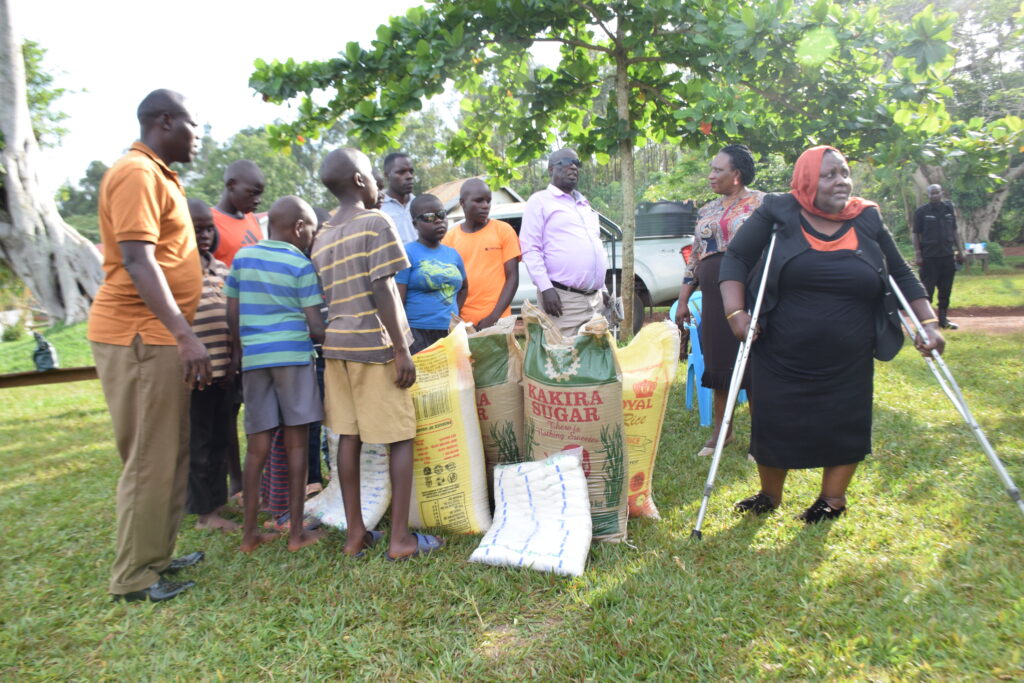
The Chairperson of the Equal Opportunities Commission Hon Safia Nalule Juuko with Mr Francis Kinubi the Head Teacher of Salaama School for the Blind.
The Chairperson, with some technical officers, visited the school to commiserate with Parents, teachers and students of Salaama School for the Blind.
On 25th November 2022, one of the dormitories of the school caught fire and lives of 11 girls between the age of 4 and 11 lost their lives.
Another six are still battling for their lives in different hospitals around Kampala.

The Chairperson also handed over the items bought by EOC staff to Salaama School for the Deaf

EOC presenting the Annual Report on the State of Equal Opportunities in Uganda to Parliament.
by Kevin
On 20th October 2022, the Equal Opportunities Commission presented the Annual Report on the State of Equal Opportunities in Uganda to Parliament.

The session was chaired by the Speaker of Parliament, the Rt Hon Anita Among, and the EOC delegation was led by the Chairperson of the Commission, Hon. Safia Nalule Juuko.
Also present were other Members of Parliament, as well as the Members of the Commission.
The Hon. Speaker appreciated the efforts of the Commission, and also urged them to map inequality in the country indicating the regional differences in a bid to enhance service delivery.
The Launch of the 9th Annual Report on the State of Equal Opportunities in Uganda FY 2021/22
by Kevin

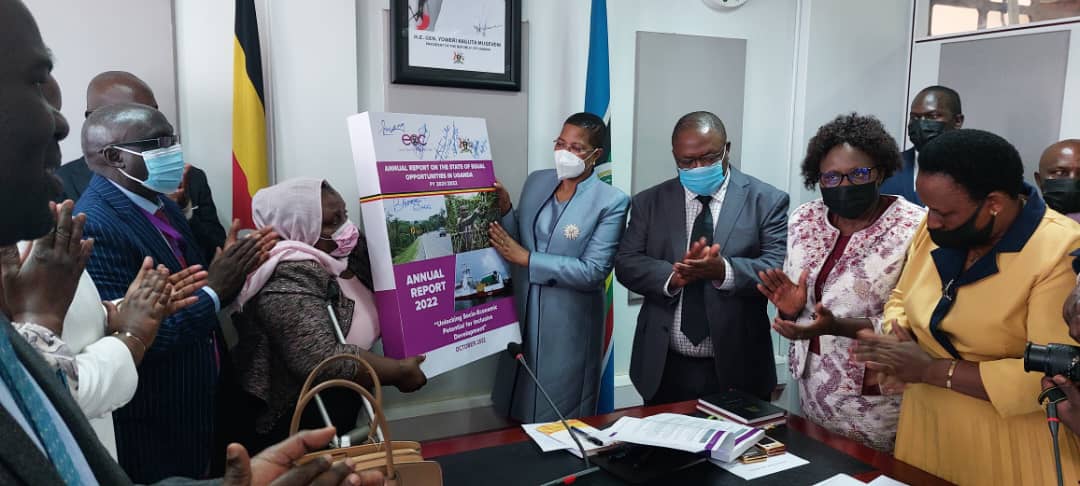
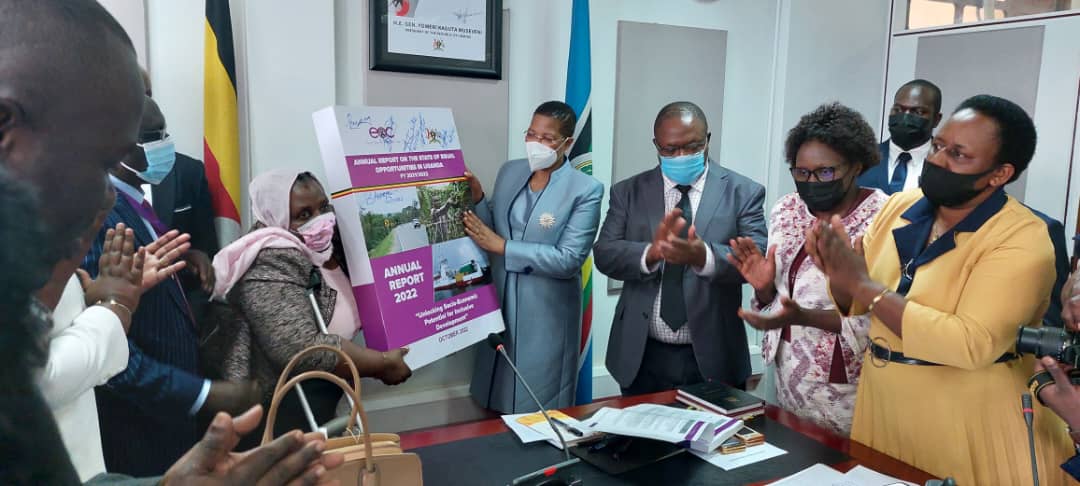
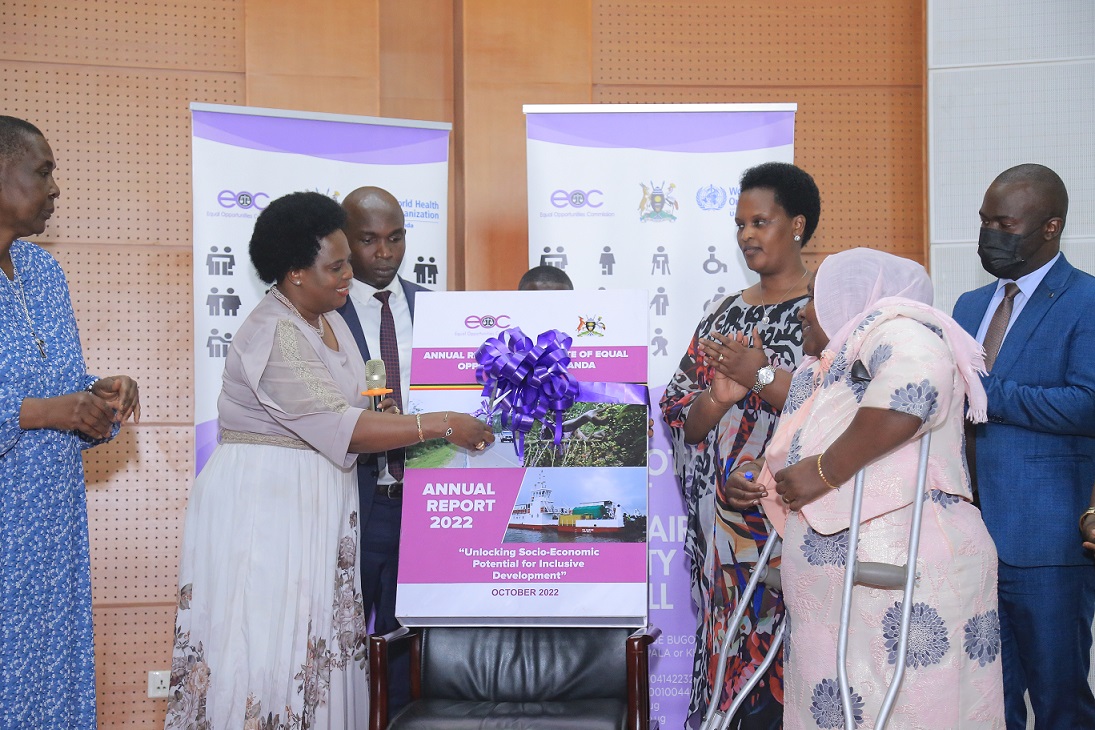
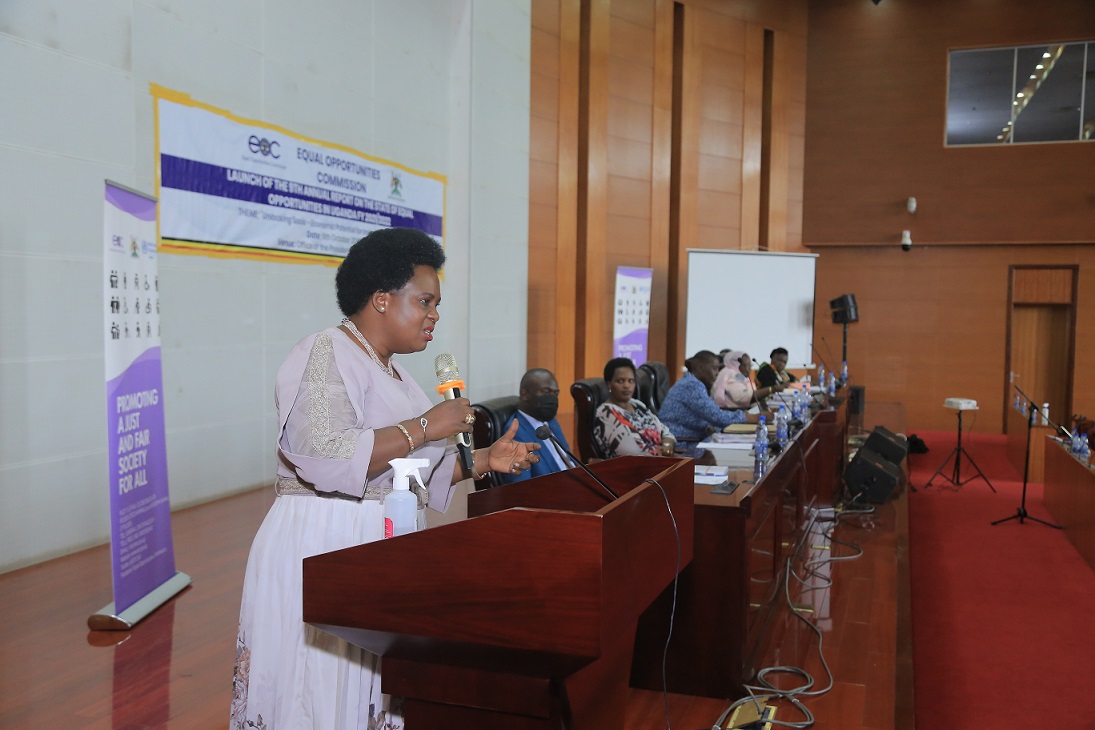
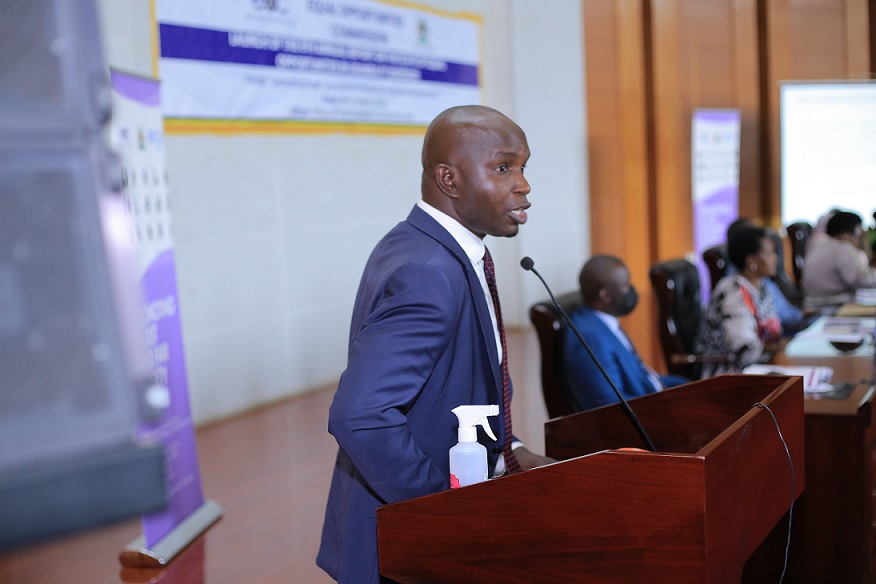
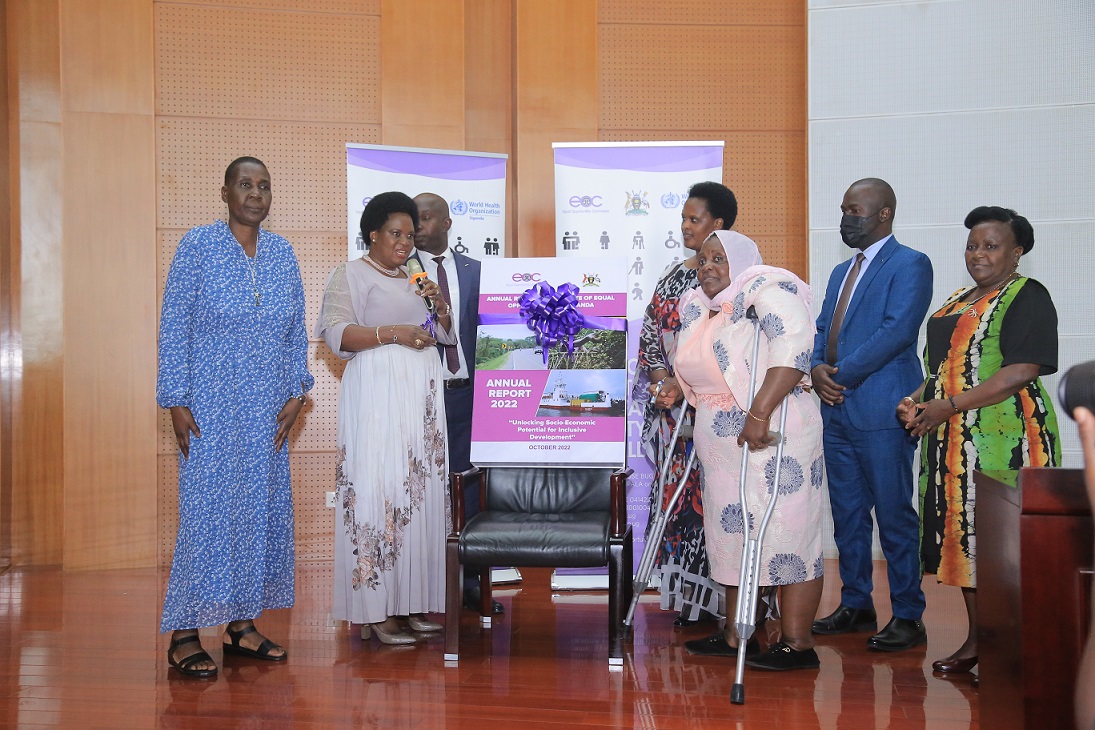
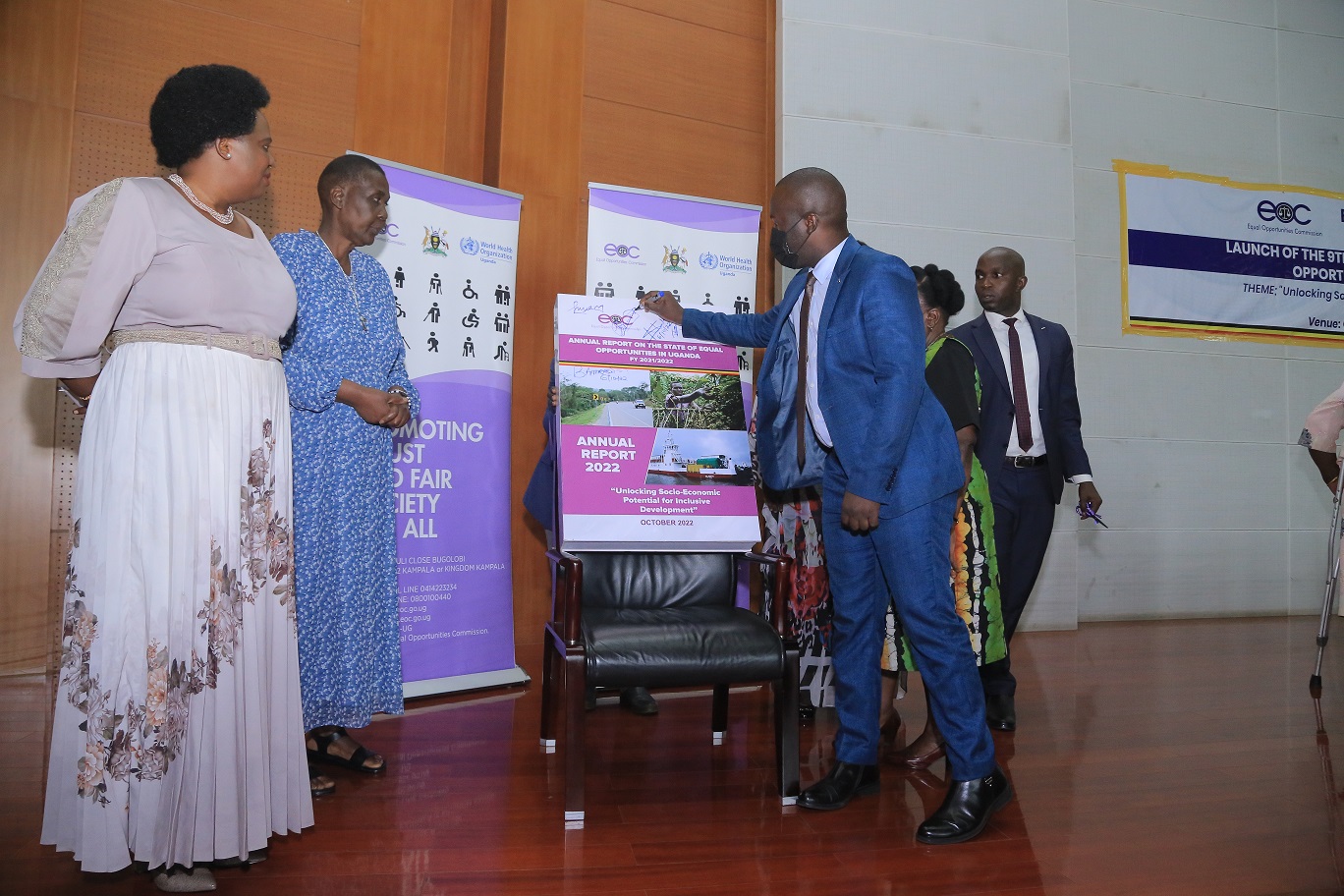
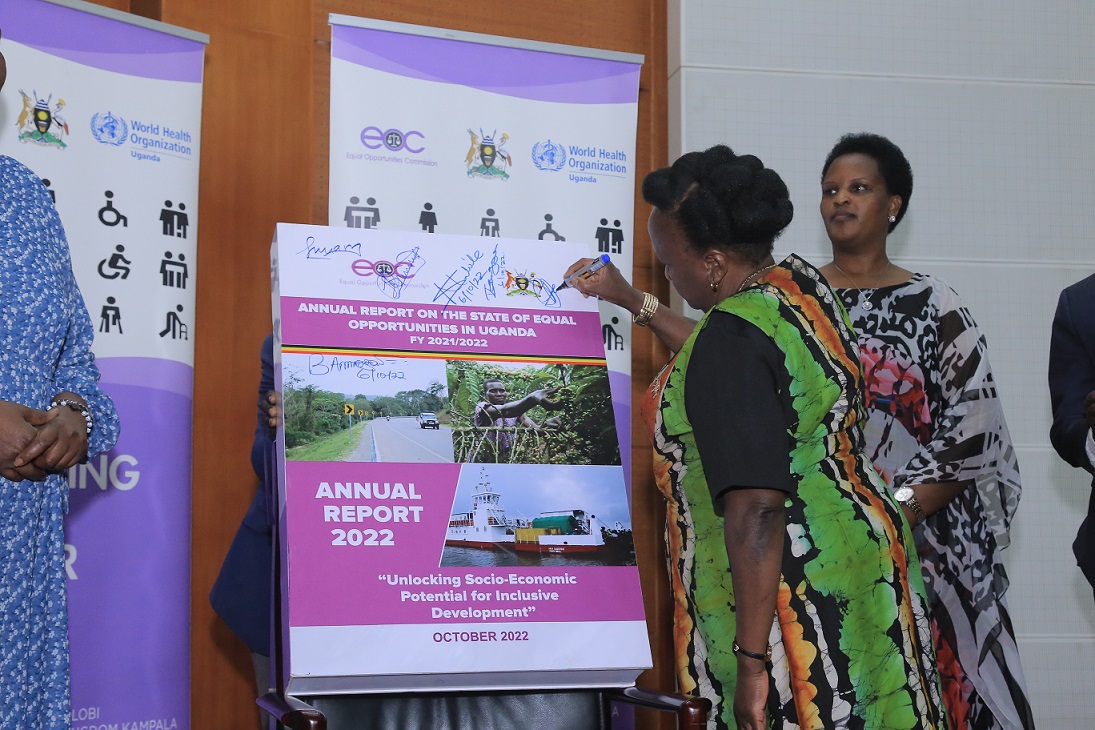
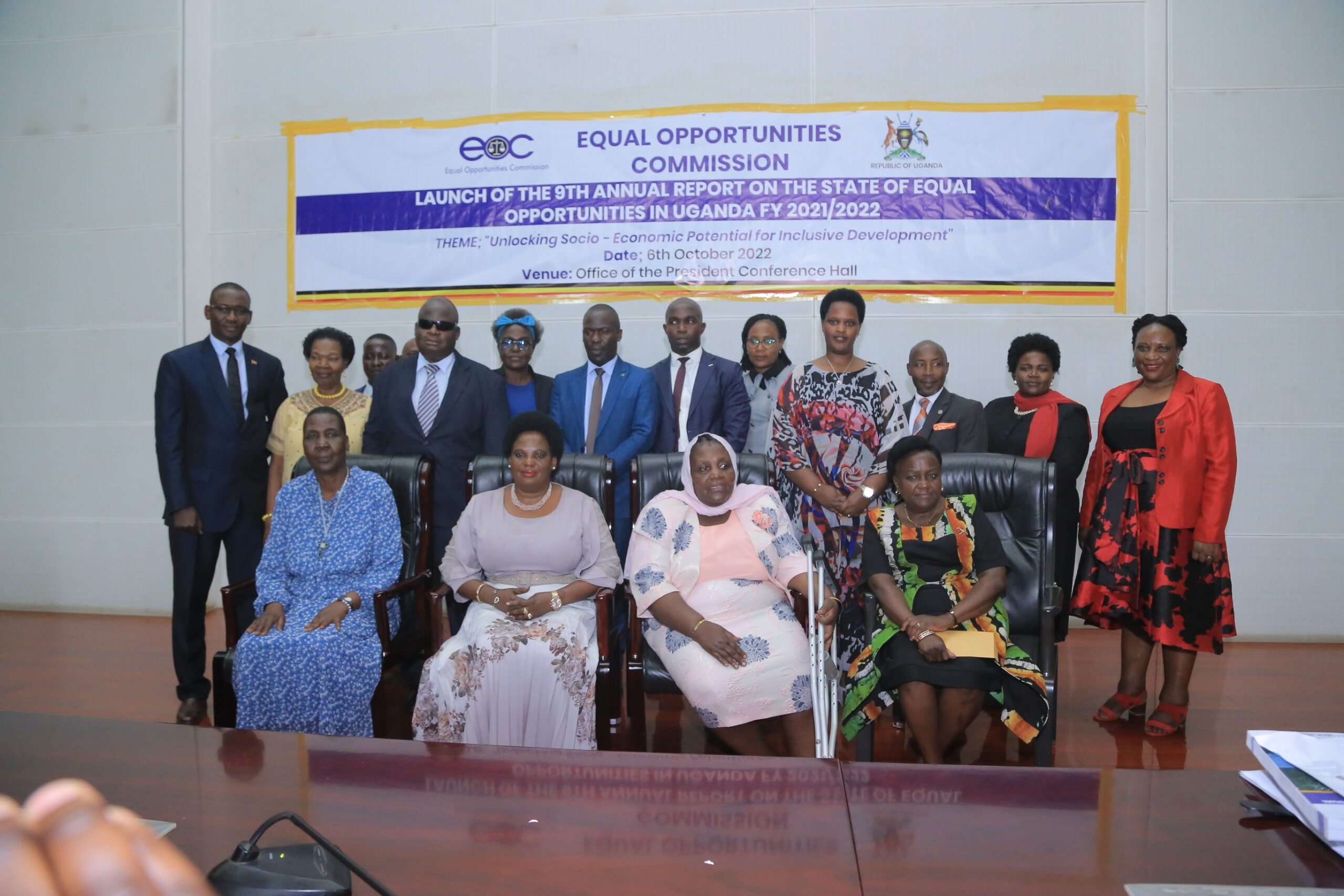
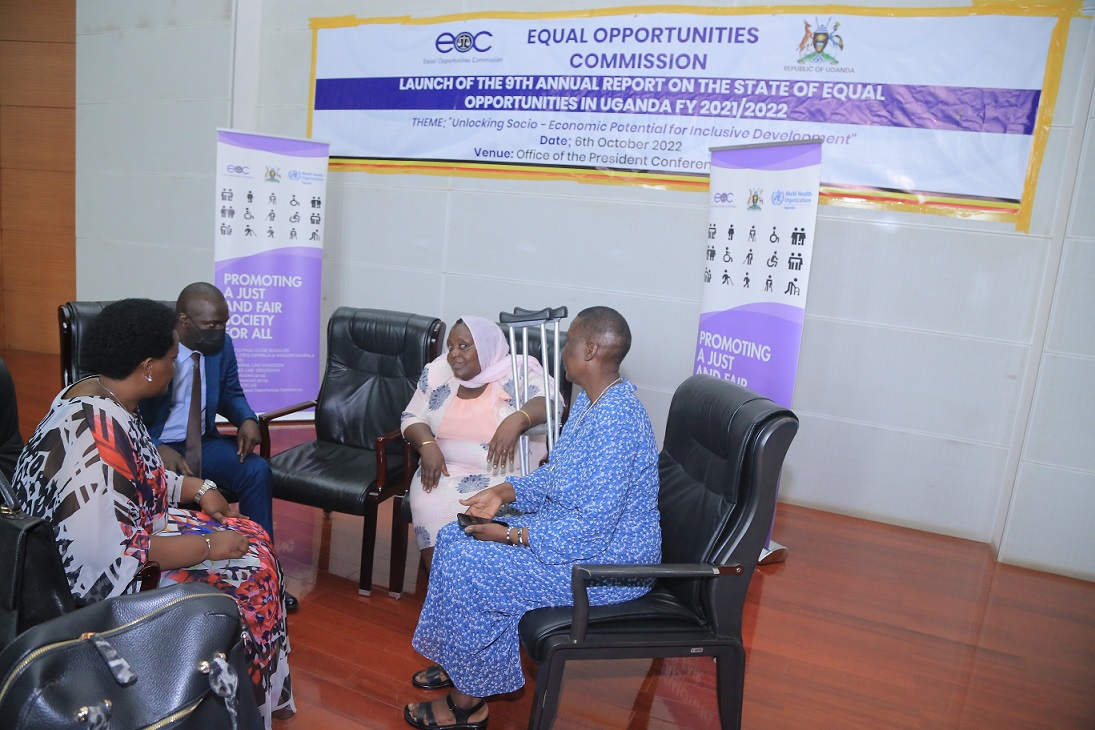
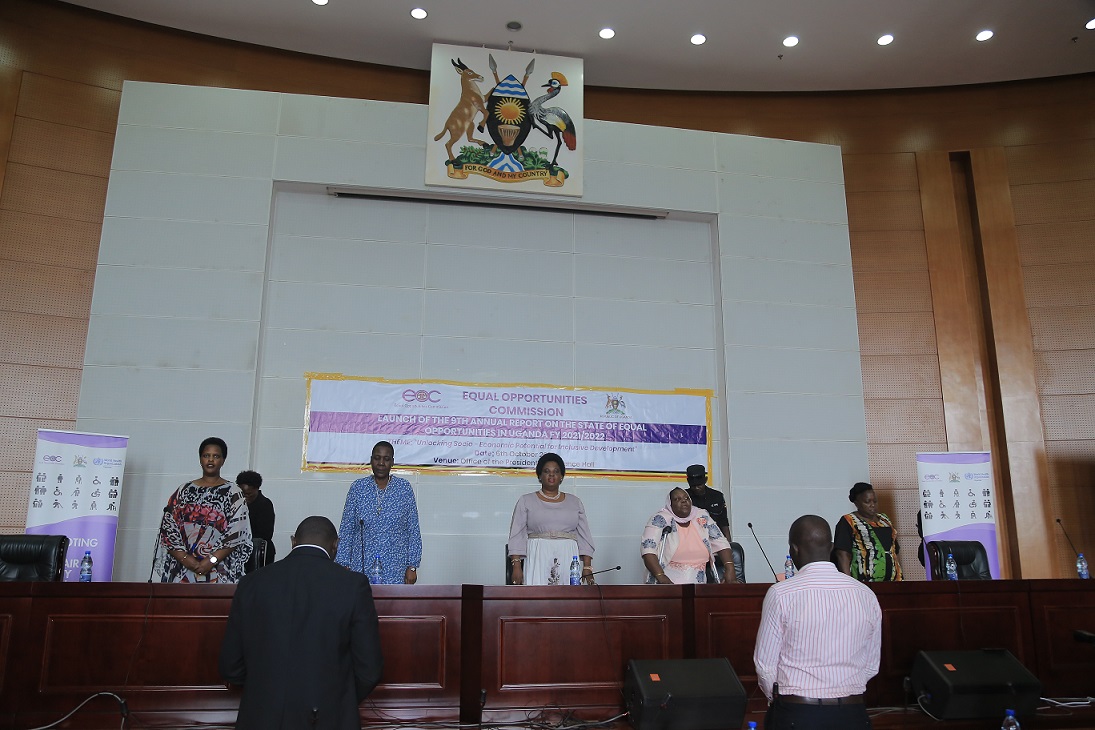
On the 6th of October 2022, the Equal Opportunities Commission launched the 9th Annual Report on the State of Equal Opportunities in Uganda for the financial year 2021/22 at the Office of the President Conference Hall, Kampala.
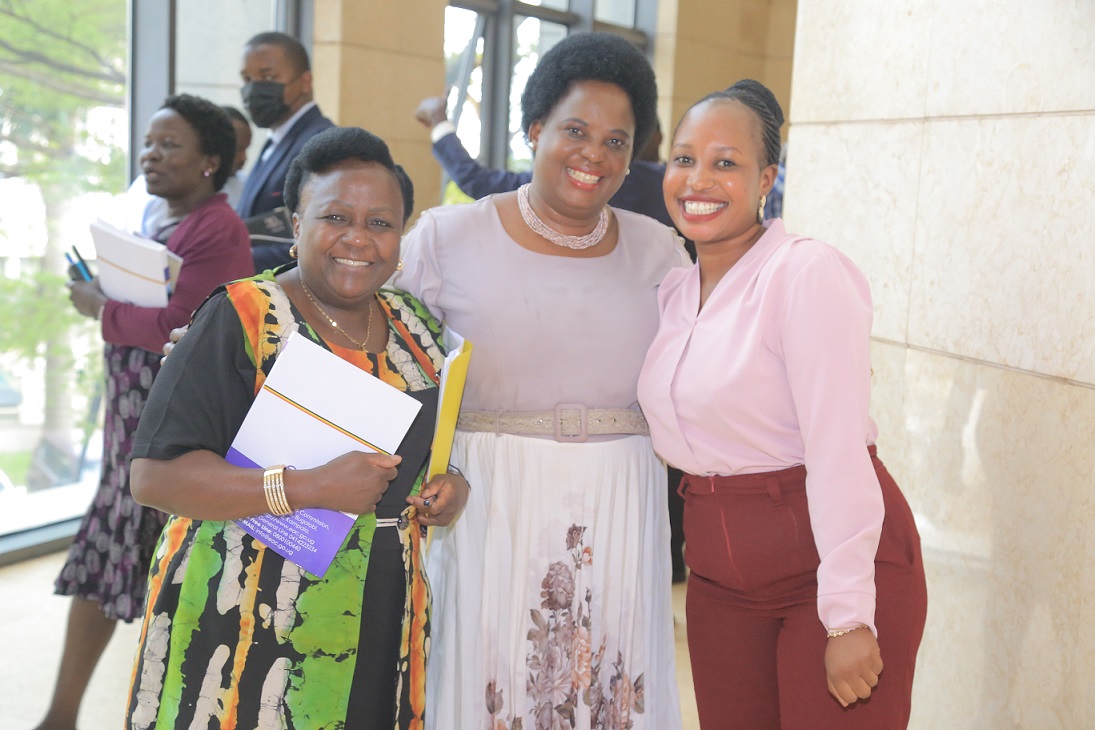
The occasion was graced by the Members and Chairperson of the Commission, as well as staff and dignitaries from other government agencies.
The guest of honor was the Hon. Betty Among, Minister of Gender, Labour and Social Development, and she was highly pleased with the efforts of the Commission in fighting inequality in our country.

She lauded the report as highly relatable, given what we ourselves see in our daily lives, and said the report must be used as a springboard for change; starting with the implementation of the guidelines recommended in it.
The report was presented by the Principal Research Officer, Mr. Bashir Lukungu, who spearheaded its compilation by the Commission through multiple field visits, research and inquiries, analysis, extrapolation, and finally dissemination.

It was a generally successful and auspicious occasion.
You can access the report here;