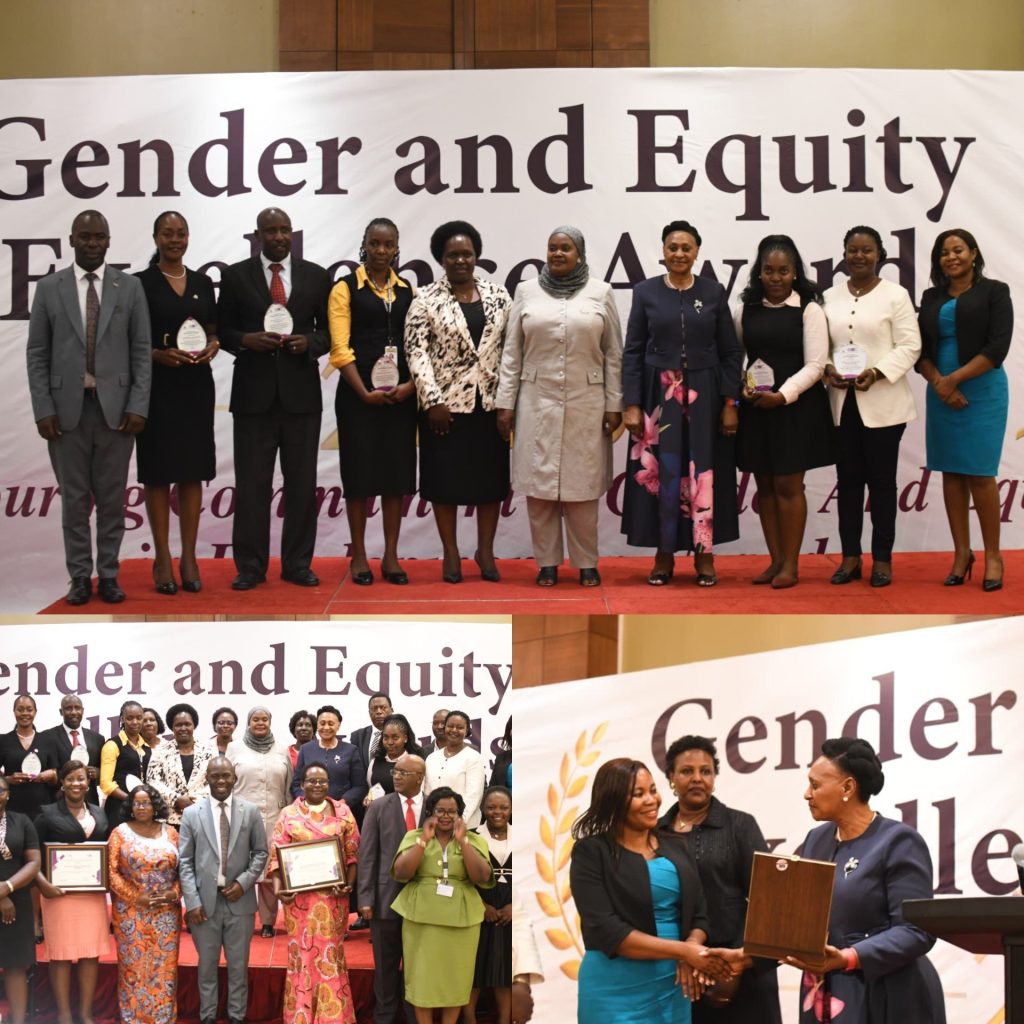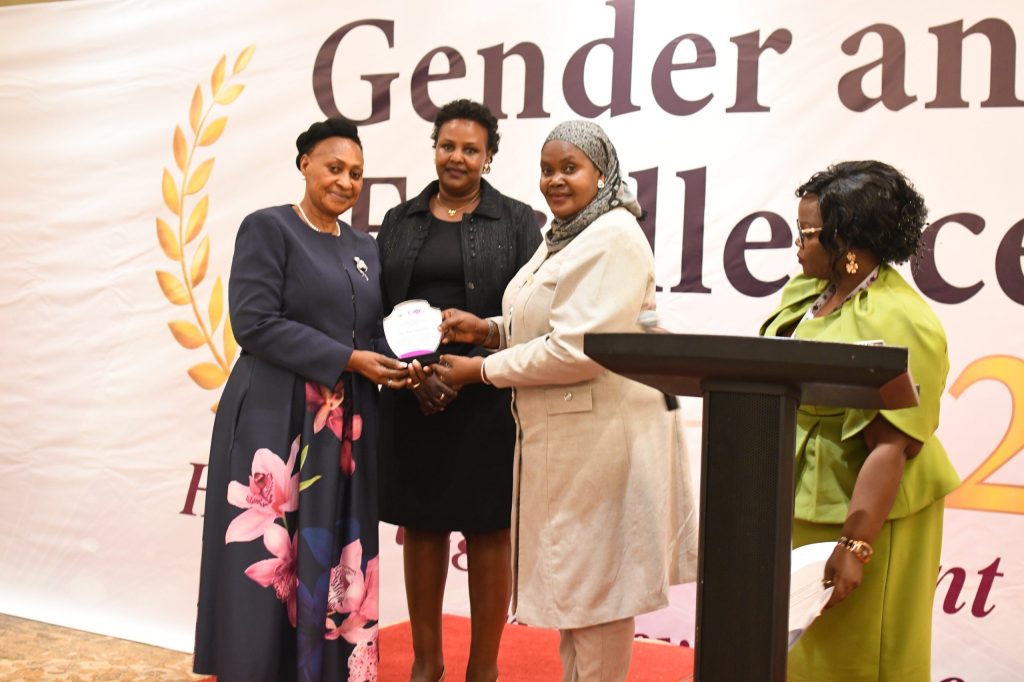
The event recognised ministries, local governments and individuals for outstanding commitment to equal opportunities in FY 2025/2026, and marked ten years of gender and equity budgeting
The Equal Opportunities Commission (EOC) held its inaugural Gender and Equity Excellence Awards earlier this week at Sheraton Hotel Kampala, recognising ministries, departments, agencies (MDAs), local governments and individuals who showed outstanding commitment to equal opportunities, affirmative action and inclusive development in FY 2025/2026.
The occasion doubled as a stakeholders’ dialogue marking ten years of gender and equity budgeting in Uganda.
The Commission’s Mandate
Under Article 32(3) and (4) of the 1995 Constitution and Section 14 of the EOC Act 2007, the Commission is required to assess and enforce gender and equity compliance across government. Each year it issues a Gender and Equity Compliance Certificate, which is a precondition for the Ministry of Finance’s certificate of compliance for the national budget.
The assessment checks whether budgets address the needs of women, youth, persons with disabilities, older persons, ethnic minorities and people in hard-to-reach areas.
Progress, but Gaps Remain
The Commission says compliance has improved, but disparities persist. While some MDAs and districts have excelled consistently, others, according to the Commission, “still budget as if Uganda has no women, no persons with disabilities and no older persons.”
The awards are intended to reward good performance, and not only to punish non-compliance.
From Voluntary Practice to Legal Requirement
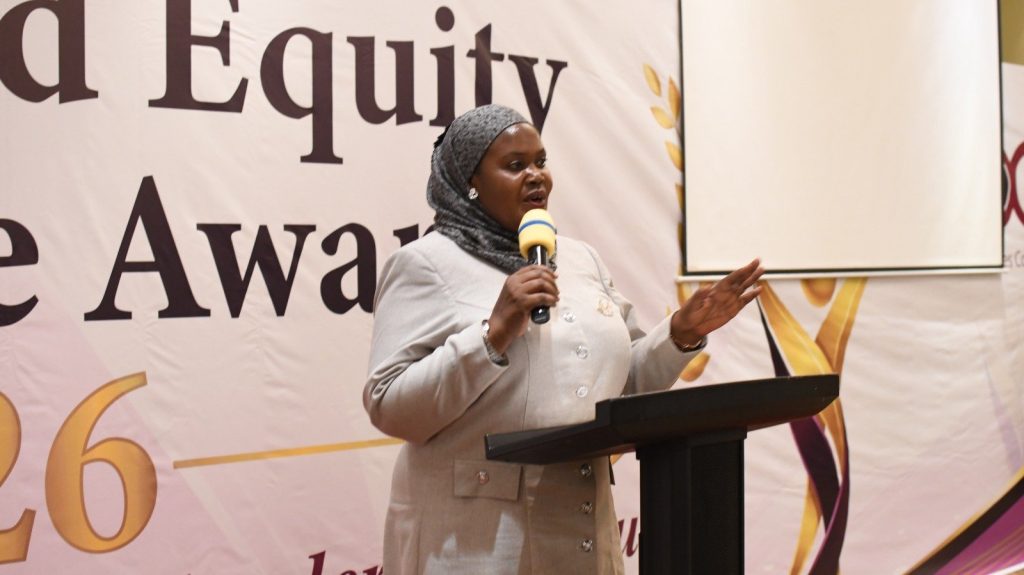
The chief guest, Rt. Hon. Rukia Nakadama Isanga, said gender and equity considerations in budgeting were largely voluntary and informal until the Public Finance Management Act of 2015 made them legally binding. Under the Act, Parliament cannot approve a sector’s budget until the EOC certifies that it adequately provides for youth, women, persons with disabilities and underserved regions.
She said Uganda “proudly stands as a pioneer” in making gender and equity a mandatory public policy tool. Over the past ten years, she noted, the EOC’s assessment, tracking and capacity building have helped steer public resources toward inclusive growth.
National development, she said, cannot be achieved if any part of the population is left behind. Prioritising young people, women, persons with disabilities and historically underserved regions does more than address inequality: it also reduces the dependency burden, boosts productivity and speeds progress toward National Development Plan IV and Vision 2040.
She cautioned that policies and laws are only foundations, and that their value lies in visible results on the ground. Closing the gap between intention and outcome, she said, requires innovation, accountability and stronger collaboration among stakeholders.
Congratulating the award recipients, she said their work should inspire other MDAs to build equity into every policy, programme and budget line, and added that government remains committed to equity, fairness and balanced regional development.
Minister Makes Four Appeals
Representing the Ministry of Gender, Labour and Social Development, Minister of State Hon. Jacquiline Mbabazi made appeals to four groups:
- Government agencies: Use the certificate as a planning and accountability tool, and track whether public money is changing lives on the ground.
- The private sector: Create opportunities for women, youth and persons with disabilities, make workplaces accessible, and ensure diversity in who gets contracts, finance and markets.
- Civil society and cultural leaders: Keep tackling discrimination, stigma and harmful practices that keep people out of development programmes.
- The EOC: Strengthen compliance monitoring, research, investigations and redress mechanisms, and use data from the 2024 census to show who is being left behind.
The minister said success should be measured not only by the size of the economy but also by how many Ugandans take part in it. Affirmative action, she explained, is about removing barriers that stop some groups from participating on equal terms, not about giving unearned advantages.
Congratulating the winners, she said their recognition should encourage them to continue and challenge others to do the same.
#EqualOpportunitiesForAll