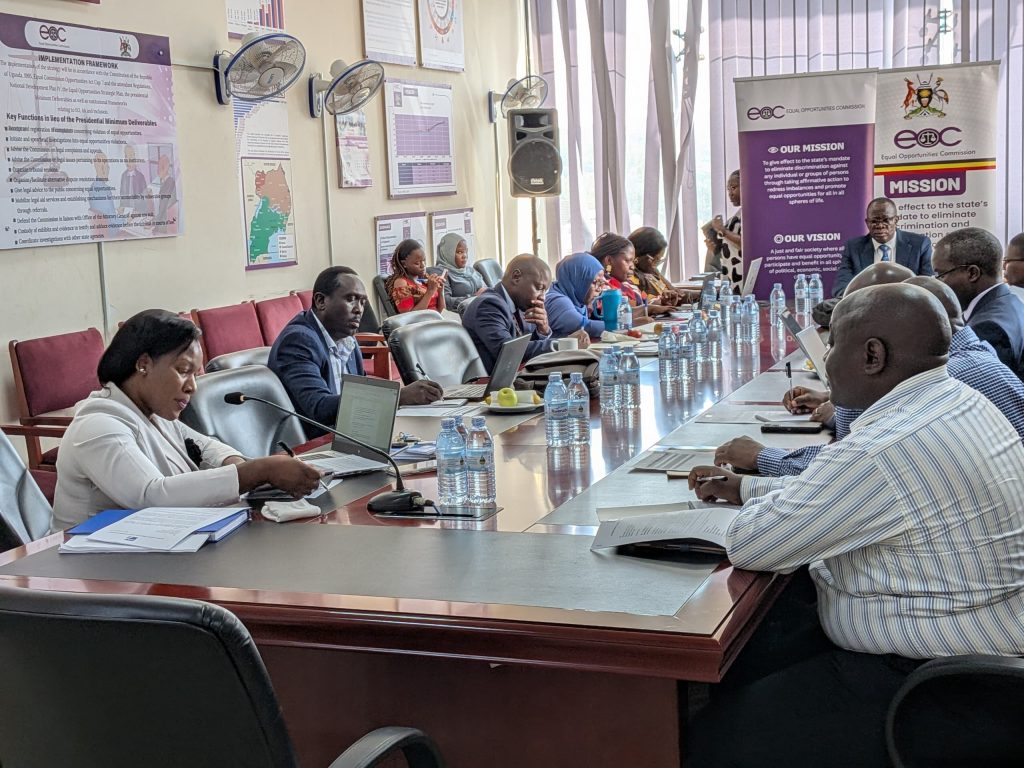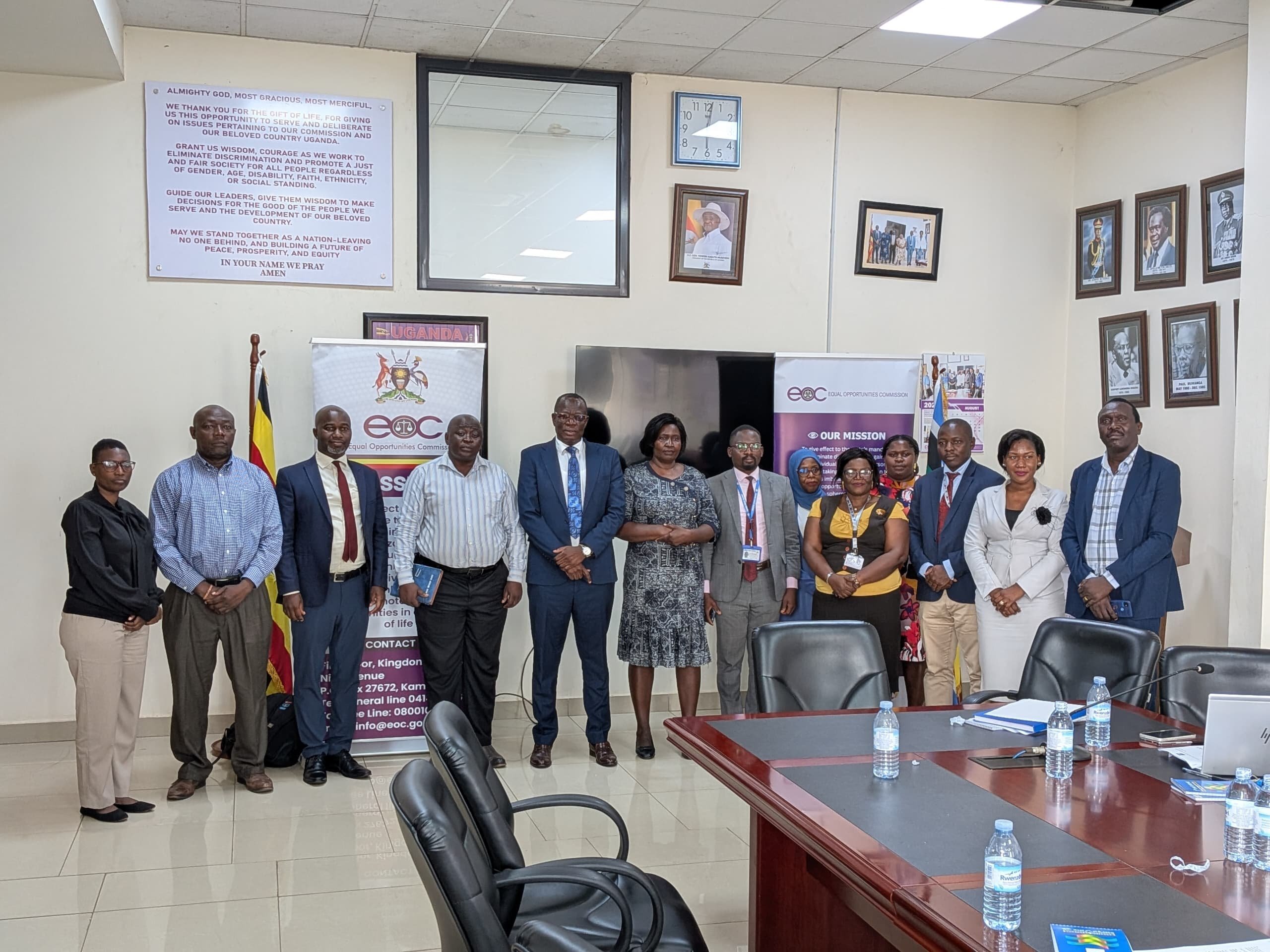
The EOC_UG has convened a stakeholders’ consultation meeting on the financial burden of accessing healthcare in Uganda, bringing together representatives from the Uganda Cancer Institute, Uganda Heart Institute, Uganda National Association of Private Hospitals, the Pharmaceutical Society of Uganda, and social protection specialists, under the moderation of Susan Atukunda, the Principal Research Officer.
In his opening remarks, the Secretary to the Commission, Dr. Shaft Nasser Mukwaya, thanked participants for their candour and committed to following up with institutions such as the Heart and Cancer Institutes for further statistics to strengthen the Commission’s evidence base. He reminded attendees of the consultation’s central purpose: to understand who bears the greatest financial burden of healthcare and to generate credible evidence capable of shaping policies toward more affordable and equitable access.
Referencing a challenge posed by the World Health Organization’s Director-General on whether poverty should determine who lives or dies from lack of access to care, Dr. Mukwaya urged participants to keep that question at the centre of their deliberations throughout the session.
Representing the Uganda Cancer Institute, Dr. Daniel explained that patients receive cancer screening, laboratory testing, and diagnostic services free of charge, with the process moving from an initial consultation through blood tests and further diagnostics before a treatment package is determined based on the patient’s specific condition and stage of disease. He confirmed that chemotherapy is also provided at no cost, though patients occasionally have to purchase medicines privately when institute drug supplies run short.
Beyond direct treatment costs, he noted that indirect costs weigh heavily on patients: transportation alone accounts for an estimated 36% of patient spending, since many must travel long distances to access care at the main centre in Kampala, while extended treatment schedules often require patients to pay for lodging near the facility for days, weeks, or even a month at a time. To reduce this burden, the institute is expanding regional centres in Gulu, Arua, and other areas, alongside plans for a dedicated patient accommodation facility to ease costs associated with prolonged stays.
A representative of the Uganda Heart Institute, referred to as Dr. Sulaiman, described the institute as a cost-sharing facility where nearly all services except medicines supplied through the National Medical Stores require payment, with prices set at roughly half of what a private facility would charge.
He outlined the significant costs associated with cardiac care: cardiac echoes cost around 70,000 UGX for children and 100,000 UGX for adults, closed-heart surgery ranges between 3.5 and 5 million UGX, and open-heart surgery costs approximately 19 million UGX, itself only half of the true cost of around 40 million UGX, largely driven by the expense of imported surgical equipment such as perfusion circuits, which alone can cost 7 million UGX per patient.
He further explained that capacity constraints, including a single operating theatre shared between adult and paediatric patients, force doctors to limit consultations to 20 patients per day, though critical cases are still attended to outside this cap. The institute treated roughly 30,000 patients in the most recent financial year, up from 27,000 the year before. A new facility under construction in Naguru, currently at 65% completion and expected to open by mid-2027, is intended to expand capacity, alongside an existing waiver mechanism for patients who cannot afford treatment.
The Uganda National Association of Private Hospitals attributed the high cost of private healthcare to several structural factors, including the expense of acquiring land and constructing facilities, the high cost of importing nearly all medical equipment since little is manufactured locally, and the ongoing cost of recruiting and retaining skilled staff such as doctors, nurses, pharmacists, and laboratory professionals.
Unlike the public sector, which benefits from a centralised procurement system through the National Medical Stores, private facilities must independently source medicines through private pharmacies, adding further cost that is ultimately passed on to patients, alongside standard operating expenses such as electricity and water billed at market rates. Despite these high costs, the association noted that many patients continue to choose private care over public alternatives, largely due to a perception of higher-quality, more timely, and more effective service delivery.
Dr. Jonas Ssuuna, President of the Pharmaceutical Society of Uganda, addressed concerns around drug shop regulation, explaining that all pharmaceutical outlets are governed under the newly enacted National Drug and Health Products Authority Act of 2026, which replaces the 1993 National Drug Authority Act and continues to prioritise the safety, efficacy, and quality of medicines.
He dismissed the notion of medicines being categorised as “for the poor” or “for the rich,” clarifying that price differences reflect the distinction between branded, patent-protected drugs and their cheaper generic equivalents, both of which must meet the same regulatory safety standards once licensed.
Turning to the household-level impact of healthcare costs, social protection specialist Mr. Ongen explained that Uganda adopted a National Social Protection Policy in 2015 aimed at introducing a form of universal health insurance, noting that Ministry of Health data indicates out-of-pocket healthcare spending accounts for nearly 20% of total household expenditure, equivalent to roughly 8.4 trillion UGX.
He described the coping mechanisms households commonly resort to when faced with catastrophic medical expenses, including borrowing money and selling productive assets such as livestock or land, warning that a single serious illness can push an entire family into lasting poverty. Mr. Ongen closed his remarks with a call for stronger, evidence-based policy action to protect vulnerable households from this cycle.
The consultation forms part of the Commission’s ongoing effort to build a credible, evidence-based picture of Uganda’s healthcare cost burden, one that can inform practical policy toward more affordable and equitable access for all Ugandans, regardless of income.